


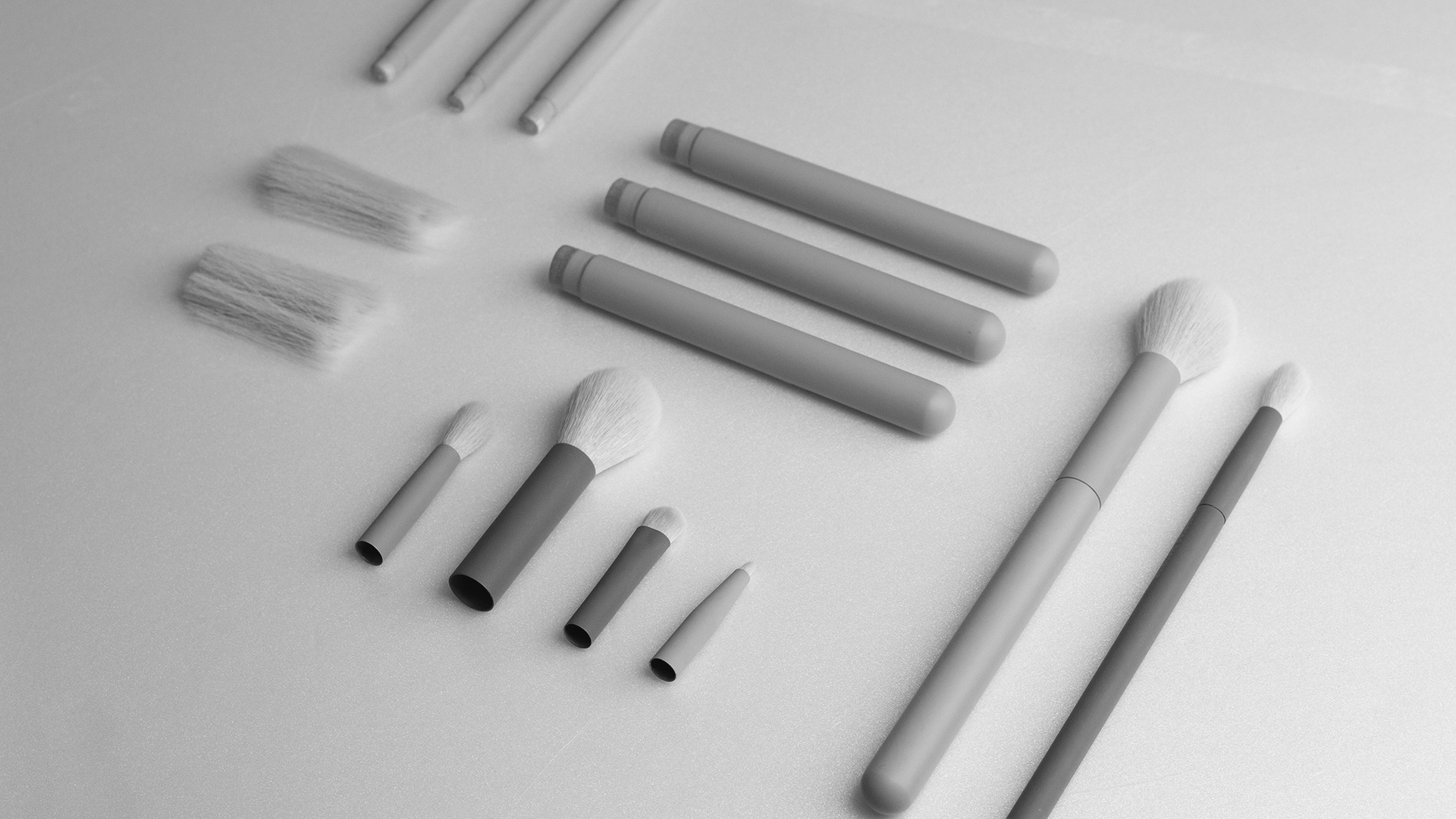
The OEM/ODM Sourcing Guide to the Pressed Oblique Brush Set
A comprehensive analysis for global cosmetic brand managers, beauty buyers, and product engineers seeking high-precision angled brush manufacturing from Seoul, South Korea.
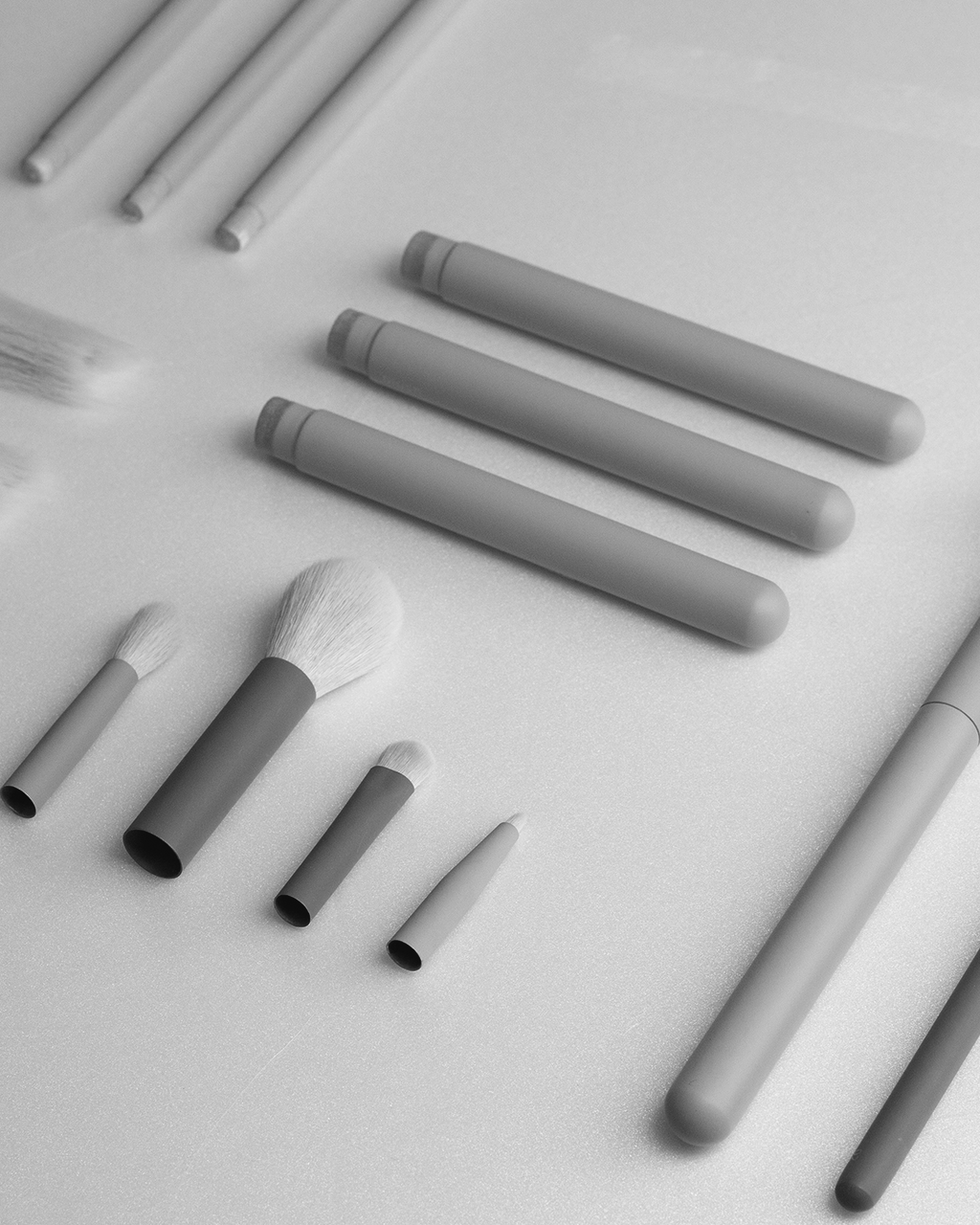
Anatomy of the Pressed Oblique Brush Architecture
The Pressed Oblique Brush Set represents a pivotal evolution in ergonomic cosmetic tool manufacturing. Unlike traditional round or dome-shaped brushes that compress formula uniformly in all directions, an oblique brush utilizes a double-calibrated geometry: a flattened, pinched ferrule combined with a strict planar bias angle (typically ranging between 22.5° and 35°).
From a mechanical standpoint, pressing the ferrule alters the internal tuft packing density. By flattening the brass or aluminum collar under controlled hydraulic pressure, bristles at the apex retain maximum flex dynamic, while fibers at the heel are firmly packed. This structural asymmetry allows makeup artists and consumers to execute crisp structural lines with the sharp edge while achieving seamless, skin-like blending with the slanted flat face.
- Asymmetric Density Calibration: High-density tuft heel support paired with hyper-flexible micro-tips.
- Mechanical Crimp Locking: Multi-groove internal ferrule locking to eliminate fiber slippage and shedding.
- Formula Fluid Dynamics: Optimized for hybrid cream-to-powder, liquid foundation, and high-viscosity contour pastes.
- Precision Angulation: Custom milling options for 15°, 25°, and 35° bevel profiles based on facial ergonomics.
Technical Manufacturing Matrix & Structural Specifications
Global procurement teams must balance aesthetic presentation with physical durability. Below is the engineering standard maintained by HNB Corporation for mass ODM/OEM production of the Pressed Oblique Brush Set:
| Component | Technical Specification Standard | OEM Customization Options | Quality Verification Method |
|---|---|---|---|
| Fiber Material | Nature-Mimicking PBT / PTT Synthetic Fibers (0.05mm - 0.07mm diameter) | Micro-crimped, wavy textured, antibacterial silver-ion coating | Microscopic cuticle check & flex memory test |
| Ferrule Structure | Seamless Heavy-Gauge Aluminum / Anodized Brass | Custom color anodization, matte/gloss finish, laser-etched logo | 10kg direct pull test & salt spray corrosion test |
| Ferrule Pressing | Hydraulic compression matrix (flattened oval wedge) | Custom pinch width (2.5mm to 8.0mm profiles) | Digital caliper dimensional check (±0.05mm tolerance) |
| Handle Construction | FSC-Certified Hardwood / Recycled PCR Plastic / Molded Resin | Custom weight distribution, ergonomic counter-sinking, UV lacquer | Drop impact test (1.5m height) & solvent resistance check |
| Tuft Bonding | Polyurethane Epoxy Resin tuft potting | Low-VOC eco-epoxy, water-resistant formulation | Centrifugal wash centrifuge & thermal cycling (-20°C to 60°C) |
Core Configurations in the Pressed Oblique Lineup
Optimized for global beauty brand portfolios, these curated variants address specific application zones, formula viscosities, and user intent patterns identified in modern beauty trends.
The Sculpting Pressed Oblique Base Brush
Engineered with a wide 35° bevel edge, this brush fits precisely under the cheekbone and along the jawline. The dense, flattened profile allows for rapid placement of cream contours followed by effortless buffing without disturbing underlying foundation layers.
Recommended Formula Pairing
Stick foundations, liquid sculpting liquids, thick cream contour pastes.
The Curved Oblique Flush & Stipple Brush
Featuring dual-length nature-mimicking fibers, this variant offers a softer press pressure. The angled crown effortlessly deposits liquid blushes and gel highlighters, creating a natural, diffused color gradient without streak marks.
Recommended Formula Pairing
Serum blushes, cream-to-powder highlighters, loose setting powders.
The Micro Pressed Oblique Precision Liner & Brow
Built with ultra-fine 0.05mm PBT filaments locked into an ultra-slim 1.5mm pressed ferrule. Gives cosmetic formulators and makeup artists surgical control over eyebrow feathering, winged eyeliner, and lip line definition.
Recommended Formula Pairing
Gel eyeliners, brow pomades, high-pigment cream shadows.
Future Procurement Trends in Cosmetic Tool Manufacturing
As global beauty brands scale their hardware offerings, procurement directors must anticipate shifting regulatory landscapes, material innovations, and consumer performance expectations.
1. Transition to High-Performance Synthetic Filaments
Global regulatory shifts, led by EU animal testing bans and rising ESG scrutiny, have pushed natural animal hair (such as goat, squirrel, and pony) out of premium brand supply chains. Modern B2B buyers now demand synthetic filaments that actively outperform natural hair in fluid dynamics. HNB's proprietary micro-surface crimping replicates natural hair cuticles, ensuring high product retention, zero oil absorption, and complete washability without hair breakdown.
2. Eco-Compliance & Circular Material Sourcing
Packaging and tool sustainability is no longer optional. Supply chains are migrating toward Post-Consumer Recycled (PCR) plastics for handle molding, FSC-certified woods, and water-based, solvent-free lacquers. Ferrules manufactured from recycled aluminum cut carbon footprints significantly during production. Global procurement teams must demand audited certifications (REACH, SVHC, ISO 14001) to safeguard against greenwashing risks in international retail markets.
3. Formula-Tool Co-Development Strategy
Leading K-Beauty brands no longer source formulas and applicators in siloes. The trend toward high-viscosity, fast-setting liquid foundations requires brushes engineered with specific fiber flex resistance. Co-developing the Pressed Oblique Brush Set alongside cosmetics formulas guarantees optimized stroke uniformity, preventing formula pooling or streaking upon application.
4. Supply Chain Agility & Lead Time Optimization
Geopolitical volatility and shifting shipping lanes have made supply chain transparency paramount. Global buyers are prioritizing established Korean manufacturers equipped with standardized raw material inventories, automated tufting machinery, and streamlined export logistics to reduce time-to-market from 120 days down to under 60 days.
Product Development & Technological Trends
The beauty tool industry is experiencing a technological transformation where physics, ergonomics, and material science intersect.
Ergonomic Weight Balancing
Modern consumers demand effortless handling. Advanced OEM brush development utilizes weighted aluminum plugs inside hollow handle cavities, positioning the center of gravity directly at the ferrule base for optimal control during prolonged application sessions.
Antimicrobial Surface Coatings
Microbial accumulation on damp synthetic fibers poses skin barrier risks. Integrating silver-ion or zinc-based antimicrobial compounds directly into PBT polymer melt spinning guarantees long-lasting bacterial inhibition throughout the life of the tool.
3D Precision Tuft Sculpting
Replacing manual hand-trimming with computer-guided 3D robotic trimming heads ensures every single Pressed Oblique Brush Set maintains exact angle dimensions and tip softness across 100,000+ unit production runs.
Seamless Hybrid Applicator Integration
Incorporating dual-ended functionalities—such as pairing a pressed oblique brush head with a high-density monocell powder puff or silicone spatula—maximizes product utility for compact travel kits.
Why Global Brands Partner with HNB Corporation
Founded in 1973 in Seoul, South Korea, HNB Corporation brings over 50 years of master brushmaking expertise directly to modern OEM/ODM cosmetic partnerships. Operating at the epicenter of K-Beauty trendsetter culture, our facility bridges traditional hand-crafting precision with automated production scalability.
Whether your brand requires fully custom tooling from scratch (OEM) or rapid selection from our extensive innovation mold library (ODM), HNB Corporation offers unmatched technical rigor, material safety verification, and brand consultation.
- 50+ Years of Manufacturing Expertise: Deep domain knowledge in fiber selection, glue chemistry, and ferrule metallurgy.
- Seoul Headquartered R&D Hub: Direct access to cutting-edge K-Beauty cosmetic trends and applicator innovations.
- End-to-End Quality Assurance: Standardized 5-step factory inspection covering incoming raw materials to final retail carton drop tests.
- Multilingual B2B Account Management: Technical sales specialists fluent in English, Japanese, and Korean for zero communication drag.
B2B Sourcing & Manufacturing FAQ
Critical technical questions answered by our engineering and sourcing directors to assist brand procurement teams.
What structural advantages does a Pressed Oblique Ferrule offer over traditional round ferrules?
A pressed oblique ferrule mechanically compresses the bristle bundle into a narrow, angled wedge. This geometry provides dual-action functionality: a crisp leading edge for targeted line work and an extended slanted surface for seam-free blending. This eliminates the need for multiple single-purpose tools, making it ideal for streamlined brush sets.
How does HNB Corporation ensure zero bristle shedding in OEM Pressed Oblique Brush Sets?
HNB utilizes a proprietary dual-component polyurethane epoxy tufting system coupled with high-precision mechanical ferrule crimping (tolerance within ±0.05mm). Every production batch undergoes standardized pull-strength testing (minimum 10kg force resistance) and ultrasonic wash cycles to ensure complete tuft lock integrity under heavy commercial usage.
Can synthetic filaments match natural hair performance in liquid and cream formulations?
Yes. HNB's proprietary nature-mimicking synthetic bristles incorporate micro-crimped PBT/PTT fibers with micro-surface texturing that replicates natural cuticles. This delivers optimal fluid pickup and controlled payload release without absorbing oil or moisture into the fiber core, making synthetic bristles superior for liquid and cream cosmetics.
What is the minimum order quantity (MOQ) and production lead time for custom ODM/OEM projects?
Standard OEM/ODM production MOQs generally start at 3,000 units per specification. Prototype sampling requires 2 to 3 weeks following technical sign-off, while full mass production timelines typically range between 45 to 60 days, supported by efficient sea and air freight logistics from South Korea.
What eco-friendly materials are available for handles and ferrules?
HNB offers FSC-certified sustainable woods (such as birch and beech), Post-Consumer Recycled (PCR) plastics, lightweight bio-resins, and recyclable anodized aluminum ferrules. All finishes utilize non-toxic, water-based lacquers to assist global brands in fulfilling international ESG and regulatory compliance requirements.
How does HNB Corporation support global compliance and quality assurance?
Operating under ISO-aligned manufacturing protocols from Seoul, HNB provides full material safety documentation (including REACH, SVHC compliance, and heavy metal-free coating certifications). We conduct multi-stage QC inspections across raw materials, tuft assembly, handle finishing, and final export packaging.
Ready to Engineer Your Custom Pressed Oblique Brush Set?
Connect directly with HNB Corporation’s Seoul engineering and sales team. Request technical specifications, physical sample kits, or custom manufacturing quotes today.