- English
- 日本語
- 한국어


Explore our custom OEM/ODM baseline product catalog, designed with ultra-fine fiber technology, anti-bacterial cores, and ergonomic shapes tailored for Japanese retail and luxury salon brands.
The cosmetic market in Tokyo—spanning high-end retail hubs like Ginza, Harajuku, and Shinjuku—demands an unprecedented level of precision, tactile elegance, and hygienic compliance. Japanese consumers are globally renowned for prioritizing smooth, pore-less, natural skin finishes (often referred to as "Muji-skin" or translucent porcelain texture). To achieve this, leading cosmetics houses and private labels in Tokyo are rapidly shifting from traditional polyurethane (PU) or NBR sponges to engineered microfiber velvet sponges.
As a established manufacturer with over 50 years of specialized production lineage rooted in East Asia (established 1973), our enterprise supplies OEM and ODM microfiber applicators tailored specifically to Japanese retail requirements and strict regulatory standards under the Ministry of Health, Labour and Welfare (MHLW).
How our Seoul & East Asian manufacturing infrastructure ensures zero-defect quality for Japanese importers.
Our proprietary electro-flocking technology anchors ultra-fine synthetic velvet bristles (0.01mm to 0.03mm denier) vertically onto a hydrophilic non-latex core. This creates a velvet barrier that picks up powder and liquid smoothly without absorbency loss.
Precision cutting eliminates rough foam seams. We produce customized shapes—such as 45-degree flat edges, dual-curves, and teardrops—engineered to reach sensitive facial contours like the inner nose corner and under-eye area effortlessly.
Every production batch destined for Tokyo port undergoes rigorous testing for skin sensitivity, REACH/SVHC chemicals, and Japanese Industrial Standard (JIS) antimicrobial performance, ensuring 99.9% resistance against Staphylococcus aureus.
Technical benchmark testing for cosmetic brand procurement officers and product formulation teams in Japan.
| Performance Indicator | HNB Microfiber Sponge | Traditional Hydrophilic PU | Rubycell Powder Puff | Standard NBR Sponge |
|---|---|---|---|---|
| Liquid Absorption Loss | Low (< 10%) | High (35% - 50%) | Moderate (20%) | Very High (> 50%) |
| Dry/Wet Dual Function | Superior (Powder & Liquid) | Liquid Only | Powder / Cushion Only | Liquid Only |
| Micro-Pore Blending Speed | Ultra-Fast (Velvet Tapping) | Standard Pressing | Surface Buffing | Moderate Streak Risk |
| Drying Time post Clean | Fast (~4 Hours) | Slow (12-24 Hours) | Moderate (8 Hours) | Slow (16 Hours) |
| Durability & Wash Cycles | > 90 Wash Cycles | 40-50 Cycles | 60 Cycles | 20-30 Cycles |
Founded in 1973, HNB Corporation has established itself as an authoritative leader in high-end cosmetic tool production. Headquartered in Seoul, South Korea, with export channels serving brand managers, procurement directors, and importers throughout Japan, our factory merges five decades of precision engineering with rapid K-Beauty/J-Beauty trend cycles.
We provide full-spectrum OEM (Original Equipment Manufacturing) and ODM (Original Design Manufacturing) services. From initial concept drawings to raw foam formulation, electro-flocking fiber selection, shape molding, and custom Japanese-compliant retail packaging (such as FSC-certified sliding boxes, biodegradable pouches, or sterile blister cases), we deliver ready-to-sell cosmetic tools.
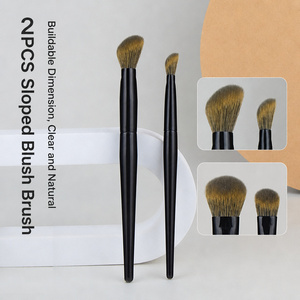
Access hundreds of proprietary applicator shapes, including angled kabukis, vase brushes, monocell powder puffs, and sloped dual-curve blenders.
100% vegan micro-fibers, recycled handles, bio-based polyols, and zero animal testing, directly aligning with modern Japanese eco-label requirements.
Dedicated sales and engineering project teams fluent in Japanese (日本語), English, and Korean, streamlining design iterations and customs export documentation.
Sourcing beauty applicators for Japanese sales demands punctuality, zero variance in batch color/density, and full transparency. We maintain optimized shipping channels to major ports including Port of Tokyo, Port of Yokohama, and express air freight to Haneda (HND) and Narita (NRT) Airports.
Custom micro-fiber density, color matching (Pantone), and shape mockups shipped to Tokyo in 5-7 days.
In-line tension testing, fiber shed prevention, and mold inspection compliant with ISO 22716 / GMP standards.
Custom JAN barcode printing, Japanese translation back-cards, and retail-ready packaging assembly.
Seamless clearance under DDP or FOB terms directly to your Tokyo fulfillment warehouse.
Clear, expert answers regarding custom manufacturing, minimum order quantities, and material compliance for Japan.
Yes. We regularly produce ultra-thin, flat micro-velvet compact puffs cut to exact millimeter dimensions (e.g., 53mm, 55mm, or teardrop compact sizes) with customized ribbon bands, logo foil stamping, and thickness matched to standard Japanese cushion compacts.
Our standard production MOQ starts at 3,000 to 5,000 units for stock foam densities with custom ribbon branding, and 10,000 units for fully bespoke molded shapes or proprietary custom dyed Pantone microfiber shades. Sample prototyping is available prior to mass order commitment.
We utilize an advanced dual-stage electro-flocking process combined with thermal cross-linking polyurethane adhesives. The fibers are rooted deeply into the inner sponge matrix, enduring over 90 standardized machine and manual wash cycles without bristle shed or degradation.
Absolutely. All raw polyurethane foams, synthetic microfiber strands, and dyes are 100% latex-free, phthalate-free, non-toxic, and hypo-allergenic. Full material safety datasheets (MSDS) and certificate of analysis (COA) documents are supplied with every order to ensure seamless customs entry into Japan.
Prototype sampling typically takes 7-10 business days. Upon sample approval, mass production takes approximately 25-30 days. Shipping from Seoul/Incheon to Tokyo Port takes only 3-5 days by sea freight, or 1-2 days by air cargo to Haneda/Narita.