
- English
- 日本語
- 한국어


Engineered for global brand owners, importers, retail buyers, and cosmetic distributors. Precision-crafted across specialized high-density polymer, natural fiber, and polyurethane facilities.
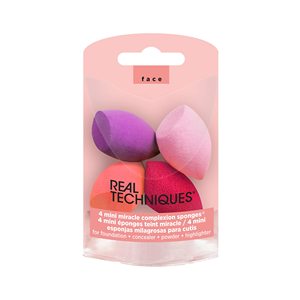
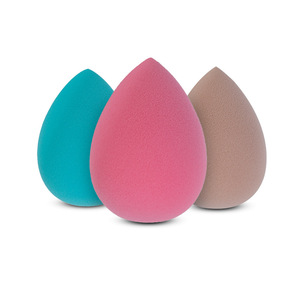
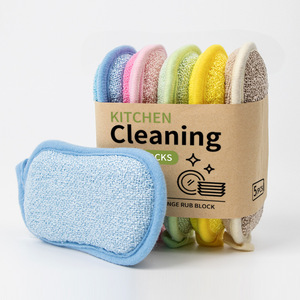
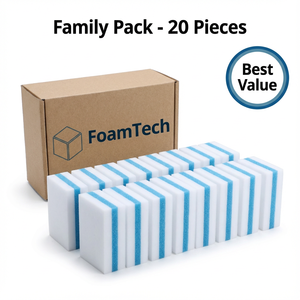

In the contemporary industrial landscape, procurement executives face an increasingly complex matrix of variables when selecting premier OEM/ODM sponge manufacturing facilities. The global sponge sector—spanning cosmetic application tools, heavy-duty industrial scrubbers, acoustic melamine solutions, and eco-friendly plant-derived kitchen scrubbers—has shifted from low-cost commodity production to advanced polymer engineering and sustainable material chemistry.
Sourcing managers must navigate critical technical indicators such as open-cell reticulation ratios, pore density (measured in pores per inch or PPI), density uniformity, liquid absorption-to-release kinetics, and mechanical tensile strength. Furthermore, international regulatory frameworks including EU REACH compliance, US FDA food-contact standards, zero-VOC off-gassing protocols, and ISO 22716 Good Manufacturing Practices (GMP) for cosmetic applicators require factories to possess rigorous quality control architectures.
This industry whitepaper establishes a comprehensive benchmark for evaluating top-tier bulk sponge factories. Backed by over five decades of Korean and international OEM/ODM beauty tool and industrial foam manufacturing heritage—pioneered by global leaders such as HNB Corporation (established 1973)—this guide delineates the material technologies, sourcing trends, and auditing parameters necessary to secure sustainable market dominance.
The performance profile of any commercial sponge depends heavily on the chemistry of its foam matrix. Leading factories utilize specialized foaming technologies optimized for specific operational environments. Below is a detailed technical comparative breakdown of dominant market materials:
| Material Category | Cellular Structure | Primary Industrial / Consumer Application | Key Performance Indicators (KPIs) | Eco & Regulatory Standard |
|---|---|---|---|---|
| Hydrophilic Polyurethane (Hydro-PU) | Micro-porous, fine open-cell matrix (80-120 PPI) | Cosmetic blenders, concealer puffs, luxury skincare tools | Non-latex, zero flaking, controlled fluid release, high tear strength | REACH, Prop 65, Cruelty-Free Vegan |
| Open-Cell Melamine Foam | Three-dimensional branched network of hard resin filaments | Magic cleaning blocks, industrial acoustic insulation | Micro-abrasive mechanical cleaning without chemical detergents | OEKO-TEX Standard 100, Non-Toxic RoHS |
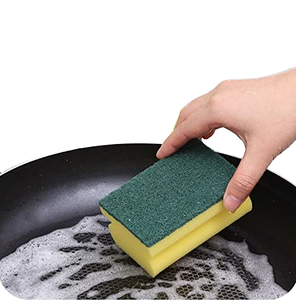
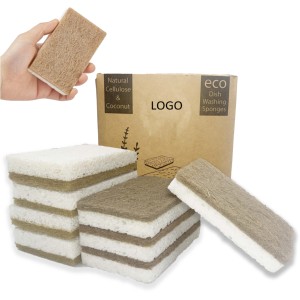
| Natural Coconut Fiber Composite | Fibrous cellulose matrix bonded with natural rubber latex | Eco-friendly dish scrubbers, non-scratch pot scourers | 100% biodegradable, high grease absorption, thermal resistance | Compostable EN 13432, USDA Biobased |
| 3D Microfiber Dual-Mesh | Synthetic polyester/polyamide blend wrapped over PU foam core | Reusable household cleaning, automotive detailing | High static attraction, extreme wash durability (>100 cycles) | ISO 14001, GRS (Global Recycled Standard) |
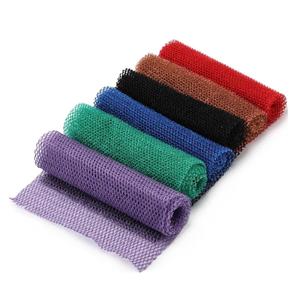
| Reticulated Nylon African Bath Net | Extruded high-tensile knotting mesh | Body exfoliation, lather-rich shower nets | Rapid drying, zero mold retention, exceptional tensile elasticity | Skin Safety ISO 10993, FDA Polymer Compliant |
Advanced factories employ physical foaming agents rather than chemical chlorofluorocarbons (CFCs) or hazardous blowing agents. By precisely controlling ambient humidity, temperature, and mixing velocity during the prepolymer reaction phase, OEM facilities produce uniform pore structures that resist hardening, yellowing, or chemical degradation when exposed to synthetic cleansers, oil-in-water emulsions, or extreme friction.
As global retail channels shift toward environmental accountability and heightened product efficacy, procurement teams must realign their sourcing strategies with three key global trends:
Traditional petroleum-derived polyols are rapidly being replaced by bio-based equivalents derived from castor bean oil, sugarcane, and recycled ocean plastics. Forward-thinking bulk suppliers are engineering sponges with up to 60% plant content that meet strict carbon-neutral supply chain targets without degrading spring-back memory.
Post-pandemic consumer awareness demands integrated antimicrobial treatment. Premier factories incorporate silver-ion or zinc-pyrithione technologies during the liquid polymerization phase. This ensures permanent antibacterial resistance embedded into the sponge core that does not wash out after routine cleaning cycles.
Legacy hand-trimming of complex sponge geometries (such as teardrop shapes, bevel angles, and ergonomic handle slots) causes significant variance in mass production. Top factories utilize 5-axis CNC laser cutting and high-speed robotic die-punching to guarantee micro-dimensional tolerances across 1,000,000+ unit manufacturing runs.
Selecting an OEM/ODM sponge supplier requires a structured evaluation strategy. Buyers should not rely solely on digital catalogs or sample kits. The following 5-point quality audit framework ensures factory compliance, operational reliability, and risk mitigation:
Verify that the factory sources raw polyurethane prepolymers, latex-free binders, and eco-dyes from certified chemical manufacturers. Inspect batch records for heavy metal contamination, phthalate content, and volatile organic compounds (VOCs). Reputable manufacturers maintain full chemical MSDS (Material Safety Data Sheets) for every raw material SKU.
Sponge density (measured in kg/m³) directly determines product lifespan and tactile softness. During factory audits, verify that the QA laboratory utilizes automated durometers (Asker C or Shore OO scales) and electronic density balance equipment to monitor density consistency across batch runs. Acceptable variance should not exceed ±3% per production batch.
Evaluate the factory's tensile testing procedures. Premium cosmetic blenders and kitchen scrubbers undergo automated wet-stretch cycles, pull-force tests to failure, and repetitive compression testing (up to 5,000 cycles at 70% deformation) to ensure the cell walls do not crumble or lose elastic memory under normal consumer use.
For cosmetic and medical-grade sponges, post-molding washing is essential to purge unreacted chemical residues, odor, and dust. Top-tier plants feature automated ultra-pure water washing lines paired with dust-free drying tunnels operating under Class 100,000 cleanroom conditions.
Bulk sponge shipping costs can be prohibitive due to volumetric weight. Qualified factories maintain high-capacity industrial vacuum packaging machinery that compresses sponge shipments by up to 70-80% without damaging structural elasticity. Ensure your factory tests post-decompression recovery rates (target: >98% recovery within 5 minutes of unsealing).
Rooted in a legacy established in 1973 in Seoul, South Korea, our manufacturing infrastructure represents over five decades of specialized tool development, OEM/ODM innovation, and global supply chain mastery. Serving major global cosmetic brands, household product leaders, and retail chains across North America, Europe, Asia, and Latin America, our facilities bridge heritage craftsmanship with automated manufacturing excellence.
From custom tooling design, 3D CAD modeling, and physical prototyping to custom color pantone matching, private label silk-screening, and customized retail box packaging, our end-to-end service model simplifies supply chain execution:
Our global presence across premier trade exhibitions—including Cosmoprof Bologna, MakeUp in New York/Los Angeles, and FCE Cosmetique—underlines our continuous commitment to advancing beauty tool and cleaning sponge technology.