- English
- 日本語
- 한국어


Explore our flagship, factory-direct range engineered for ultra-smooth formula application, minimal absorption, and unmatched durability.
In the rapidly evolving landscape of global beauty procurement, microfiber velvet beauty sponges have transitioned from a niche innovation to an essential SKU for top-tier cosmetic brands. Sourcing executives and brand directors evaluating Top China Microfiber Sponge Factories & Suppliers must look beyond surface aesthetics and evaluate the fundamental material engineering that sets world-class OEM manufacturers apart.
Traditional hydrophilic polyurethane (PU) sponges, while effective for blending, rely on open-cell pore structures that absorb significant quantities of liquid foundation, concealers, and serums. This leads to product wastage ranging between 35% and 50% per application. Microfiber sponges solve this systemic issue through an advanced dual-layer synthesis: a ultra-dense hydrophilic polyurethane core wrapped in a micro-flocked layer of ultra-fine synthetic fibers (typically ranging from 0.6 to 1.2 Dtex).
Combines a soft latex-free foam inner core with an outer barrier of microscopic velvet fibers, preventing deep liquid penetration.
Electrostatic flocking deposits millions of charged fibers vertically onto the substrate, creating an airbrush-like contact zone.
Infused with antimicrobial zinc or silver ions during polyol polymer synthesis, suppressing 99.9% of bacterial growth.
When specifying procurement parameters for private label manufacturing, supply chain managers should reference standardized physical metrics:
| Performance Parameter | Microfiber Velvet Sponge | Standard Non-Latex PU Foam | Silicone Applicator Pad |
|---|---|---|---|
| Product Absorption Index (PAI) | Ultra-Low (< 8%) | High (35% – 50%) | Zero (0%) |
| Finish Effect | Velvet Airbrush / Buildable | Dewy / Natural | Streaky / Needs Buffing |
| Tensile Elongation Strength | > 350% (High Resilience) | 280% (Moderate) | > 500% (Non-Porous) |
| Dry & Wet Dual Utility | Excellent (Powders & Liquids) | Liquid & Cream Focused | Liquids Only |
| Wash Cycle Lifespan | 90+ Cleanings without shed | 45–60 Cleanings | Indefinite |
Analyzing regulatory shifts, eco-design directives, and automated manufacturing innovations reshaping cosmetic tool manufacturing in China and Korea.
Global regulatory bodies like EU REACH and the US FDA are tightening guidelines around volatile organic compounds (VOCs) and petroleum-based polymers. Leading Chinese suppliers are pioneering eco-friendly polyurethane derived from castor oil, plant polyols, and recycled ocean plastics (rPET microfiber). Sourcing managers must prioritize suppliers offering zero-waste thermal bonding that eliminates chemical adhesive residues.
Manual die-cutting is being replaced by 5-axis CNC laser slicing and automated electrostatic flocking lines. This automation reduces dimensional tolerance variances to under ±0.5mm, ensuring absolute consistency across millions of units—a critical requirement for high-end retail brands selling multi-pack sets and subscription boxes.
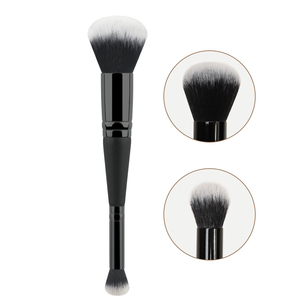
Consumer demand is leaning heavily toward hybrid beauty tools that unite the structural ergonomic control of wood or aluminum brush handles with the flawless buffing efficiency of micro-flocked velvet sponges. OEM/ODM buyers are ordering dual-ended tools incorporating synthetic brush hair on one side and precision microfiber sponges on the other.
Enterprise beauty brands require audited evidence of workplace safety, ISO 22716 cosmetics GMP certification, and zero-landfill manufacturing practices. China's top tier suppliers now offer complete carbon-footprint tracing from raw polyol storage to final export shipping container loading.
Building upon over five decades of K-Beauty engineering heritage and advanced Chinese industrial manufacturing capacity (incorporating established expertise since 1973), our partner facilities represent the apex of OEM/ODM beauty tool production. We seamlessly bridge world-class product design with high-yield, cost-optimized manufacturing operations.
Every single batch of microfiber beauty sponges and custom makeup brushes undergoes stringent automated and manual verification:
Get expert answers on custom OEM/ODM parameters, MOQ options, quality testing, and international shipping logistics.
Partner with China and Korea's premier makeup brush and microfiber sponge OEM/ODM manufacturer. Request custom samples, technical specifications, and factory-direct volume pricing today.
Get Catalog