
- English
- 日本語
- 한국어


Explore our primary certified export lines engineered for luxury cosmetics brands, professional private labels, and high-volume retail buyers worldwide.
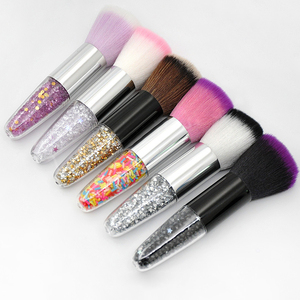
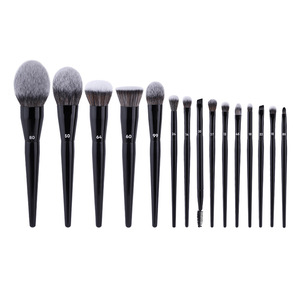
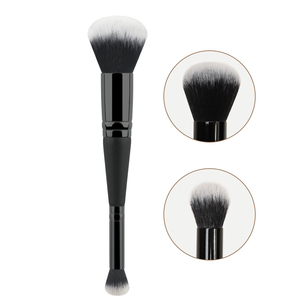
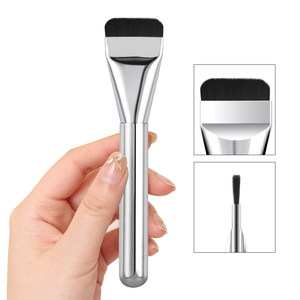
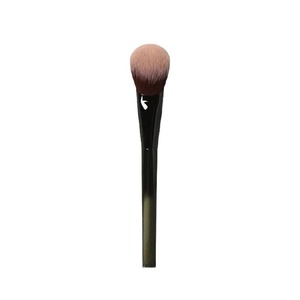
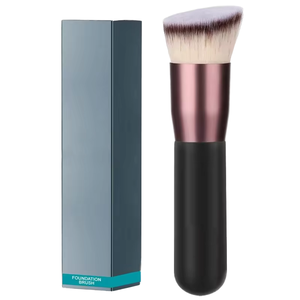
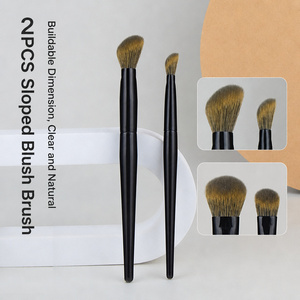
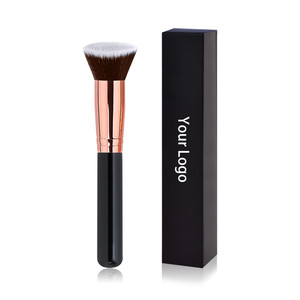
The global cosmetic tool market has undergone a dramatic structural evolution. Modern consumers demand unparalleled precision in liquid foundation application, contouring, and facial sculpting. Central to this transformation is the oblique (angled) brush—a geometrically complex cosmetic tool designed to map the natural contours of human bone structure.
For international importers, corporate brand managers, and B2B procurement directors, sourcing oblique brushes involves significantly higher technical scrutiny than standard flat or rounded cosmetic brushes. The angled trim profile exposes any structural flaw in fiber tension, ferrule crimping, or weight distribution. Concurrently, European Union regulations require strict adherence to chemical, physical, and environmental safety standards, making CE certification and REACH compliance mandatory criteria for reliable exporters.
As a pioneer headquartered in Seoul, South Korea since 1973, HNB Corporation has set the benchmark for K-Beauty OEM/ODM manufacturing. This whitepaper provides procurement executives with deep technical insights into oblique brush architecture, manufacturing parameters, global compliance frameworks, and future procurement trends.
Unlike symmetrical face brushes, an oblique brush features a precise bevel cut ranging from 15° to 35°. This specific angular variance determines how pigment and liquid formulas transition onto the dermis under varied pressure points.
Micro-trimmed filament angles ensure uniform laydown of high-viscosity foundations and cream blushes without micro-streaking or product trapping.
Constructed using premium anodized aluminum or brass ferrules with dual micro-groove mechanical crimping to eliminate shedding under continuous wash cycles.
Engineered PBT/PET synthetic fibers featuring micro-etched surfaces that mimic natural animal hair cuticles for optimal product pickup and release.
When evaluating oblique brush factories, technical directors must ensure that the tufting density matches the targeted cosmetic viscosity. High-density flat-top oblique kabukis excel at full-coverage liquid stippling, whereas tapered oblique blush brushes demand lower fill weights to allow soft, diffused powder feathering.
Navigating cross-border commerce into the EU, UK, and North American markets requires rigorous product documentation. While cosmetic applicators fall into specialized regulatory categories, achieving CE alignment and international compliance safeguards brands against supply chain disruptions and product recalls.
| Regulatory Standard | Technical Requirement | Operational Impact for Importers |
|---|---|---|
| CE Compliance (EU Directives) | General Product Safety Directive (GPSD) & mechanical integrity. | Guarantees structural safety, non-toxic components, and zero sharp edges/defects. |
| EU REACH Regulation | Restriction of SVHC (Substances of Very High Concern), Heavy Metals, & Phthalates. | Ensures adhesives, coatings, and ferrules do not leach toxic chemicals during skin contact. |
| ISO 22716 Cosmetics GMP | Good Manufacturing Practices for cosmetic tool production lines. | Verifies cleanroom assembly, raw material traceability, and batch-to-batch consistency. |
| Cruelty-Free / Vegan Audit | 100% elimination of animal-derived components (hair, bone glues). | Meets modern ESG criteria and fast-tracks retail placement in major beauty chains. |
Factories operating under accredited ISO 22716 and CE standards employ multi-stage quality control. At HNB Corporation, every production lot undergoes pull-force testing (verifying bristle retention up to 5kg of linear tension), chemical leaching analysis, and salt-spray testing on aluminum ferrules to prevent oxidation over time.
As corporate sustainability goals align with shifting consumer demands, B2B beauty procurement is experiencing three major paradigm shifts:
Traditional petroleum-derived PBT fibers are rapidly giving way to bio-based polymers sourced from castor oil and ocean-bound post-consumer recycled (PCR) PET. Advanced factories now offer bio-synthetic bristles that maintain tactile softness and chemical resilience while reducing carbon footprints by up to 40%.
Leading exporters are replacing virgin plastics with FSC-certified birch wood, bamboo, and biodegradable PLA (polylactic acid) handles. Furthermore, aluminum ferrules are increasingly processed using closed-loop water recycled anodization methods.
The market is moving away from single-use tools toward multi-functional hybrid applicators. Dual-ended oblique brushes featuring integrated silicon cushions, spatula tips, or detachable mini kabuki heads are leading retail growth in the K-Beauty and Western luxury sectors.
Headquartered in Yongsan-gu, Seoul, South Korea, HNB Corporation has stood at the forefront of beauty tool innovation for over five decades (since 1973). Our manufacturing infrastructure integrates traditional craftsmanship with modern automated tufting technology.
Whether manufacturing strictly to client technical drawings (OEM) or developing breakthrough tools from our extensive patent library (ODM), we deliver tailored turnkey solutions.
Our Seoul development hub continuously introduces patented brush structures, such as our signature Vase Brush, Pressed Oblique Sets, and Triangle Kabukis.
With dedicated account managers fluent in English, Korean, and Japanese, we ensure seamless communication, rapid sampling turnaround, and transparent export logistics.
Find authoritative answers to critical technical, regulatory, and commercial questions regarding oblique brush manufacturing.
CE compliance for cosmetic brushes involves testing under the EU General Product Safety Framework. This includes heavy metal analysis (EN 71-3 compliance for colorants/coatings), phthalate-free verification on handles, bio-compatibility testing for skin irritation, and mechanical safety inspection to ensure no sharp metal edges exist on ferrules.
Yes. HNB Corporation specializes in full-service OEM and ODM manufacturing. Brands can specify exact handle dimensions, ferrule finishes (matte, glossy, anodized, electroplated), filament material blends, laser-etched or foil-stamped branding, and bespoke packaging configurations.
The slanted surface of an oblique brush matches the 3D planar angles of the cheekbones, jawline, and orbital sockets. This allows artists and consumers to maintain consistent pressure and surface contact, achieving seamless blending with significantly less manual maneuvering compared to flat foundation brushes.
Angled brushes are particularly prone to fiber loss if improper gluing techniques are used. We utilize medical-grade epoxy resins coupled with a proprietary multi-stage thermal curing process. Combined with automated dual-crimp ferrule technology, our brushes withstand over 100 industrial wash cycles without structural degradation or hair loss.
Standard OEM/ODM MOQ generally begins at 3,000 to 5,000 units per customized specification, depending on handle tooling and custom color matching. Prototype sampling takes 7 to 14 business days, with mass production completed within 35 to 45 days post-sample approval.
Absolutely. 100% of our synthetic bristles are cruelty-free and vegan. We offer advanced nature-mimicking fibers, bio-based PBT, recycled aluminum ferrules, and FSC-certified wooden or recycled plastic handles upon request.
Our corporate headquarters and main operations are located at 2F Shinsegi Handeok B/D, 49 Hangang-daero, Yongsan-gu, Seoul, 04379, South Korea. We export directly to global ports via sea, air, and express freight, offering FOB, CIF, or DDP terms.
Whether you require standard OEM manufacturing, custom engineered oblique brush tools, or sustainable Private Label solutions, our engineering team is ready to assist your brand.
Get a Quote