
- English
- 日本語
- 한국어


Custom OEM/ODM manufacturing featuring micro-cellular SBR, non-nitrosamine natural rubber, and hybrid elastomer matrices.
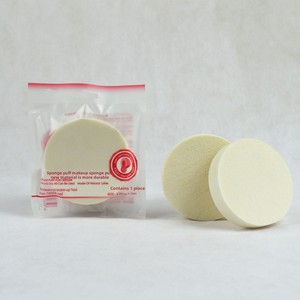
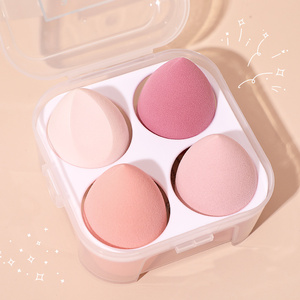
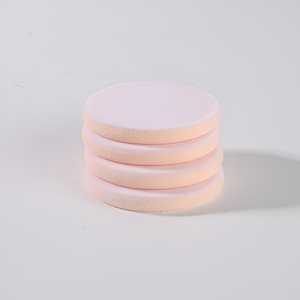
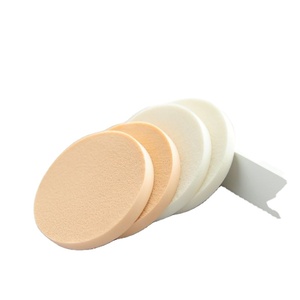
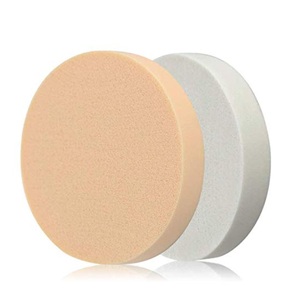
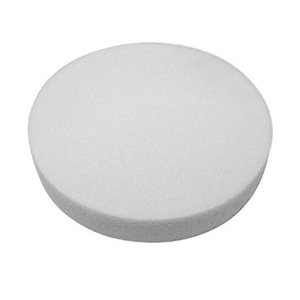
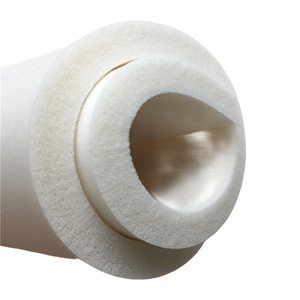
Founded in 1973, HNB Corporation has evolved from a specialist brush and cosmetic tool atelier into an internationally recognized OEM/ODM authority in cellular elastomer manufacturing. Operating out of advanced production facilities near Seoul, South Korea, our manufacturing infrastructure fuses decades-old vulcanization craftsmanship with automated continuous foaming technologies. As global cosmetic brands transition toward higher standards of safety, micro-pore consistency, and structural resilience, our manufacturing lines set the industry benchmark for CE-certified latex foam processing.
Unlike conventional standard-foam converters that rely on third-party raw blocks, HNB Corporation governs the entire supply chain—from raw latex emulsion compounding and sulfur vulcanization to precision skiving, 3D contour shaping, and cleanroom packaging. This end-to-end integration ensures that every batch of Styrene-Butadiene Rubber (SBR) and Natural Rubber Latex (NRL) exhibits rigorous physical uniformity, zero chemical leaching, and optimal mechanical rebound properties.
Complete custom tooling, private labeling, unique durometer formulations, and custom geometric slicing designed to match specific cosmetic viscosity profiles.
Full compliance with European Union MDD/MDR standards, REACH Annex XVII chemical safety, RoHS, EN 71-3 toxicity limits, and ISO 10993 cytotoxicity parameters.
Dedicated polymer laboratory driving innovation in bio-based polyol latex blends, nitrosamine-free curing systems, and zero-odor SBR matrix refinements.
The designation of a CE Certified Latex Sponge extends far beyond simple surface aesthetics. In the contemporary regulatory environment of the European Union, cosmetic tools and medical-grade applicator foam rolls must satisfy stringent safety directives to guarantee skin compatibility and zero chemical toxicity. The European CE mark validates that our latex foam formulations comply with essential health, safety, and environmental protection standards under applicable directives, including REACH (Registration, Evaluation, Authorisation and Restriction of Chemicals) and EU Regulation (EC) No 1223/2009 on cosmetic products.
Primary focus in latex manufacturing centers on the control of extractable nitrosamines and nitrosatable substances. Nitrosamines are potential chemical compounds that can form during the vulcanization step when secondary amine accelerators (such as dithiocarbamates or tetramethylthiuram disulfide) react with nitrosating agents. At HNB Corporation, our chemical engineers utilize advanced ultra-low nitrosamine and non-nitrosamine accelerator vulcanization systems. By deploying ultra-pure zinc oxide activators alongside specialized sulfur donors, our foam matrix yields undetectable levels of volatile nitrosamines when tested via Gas Chromatography-Thermal Energy Analysis (GC-TEA).
| Test Parameter | Standard Test Method | CE / EU Benchmark Requirement | HNB Corporation Factory Result |
|---|---|---|---|
| Extractable Nitrosamines | EN 71-12 / GC-TEA | < 0.05 mg/kg | Not Detected (< 0.01 mg/kg) |
| Cytotoxicity Index | ISO 10993-5 (In Vitro) | Grade 0–1 (Non-Cytotoxic) | Grade 0 (Zero Cell Lysis) |
| Heavy Metal Extraction | EN 71-3 (Category III) | Strict mg/kg Thresholds | Fully Compliant / Below Detection |
| Skin Irritation Test | ISO 10993-10 / OECD 439 | Non-Irritant / Primary Irritation Index 0 | 0.0 (Zero Skin Reaction) |
| Formamide & SVHC Content | REACH Annex XVII | < 0.1% w/w Threshold | 0.00% (SVHC Free) |
| Water Absorption Capacity | Internal ASTM D1056 Mod. | > 300% Dry Weight | 450% ± 20% Rapid Absorption |
Furthermore, physical safety requires exact micro-structural integrity. During application, inferior latex sponges are prone to crumbling, shedding micro-particles onto skin pores or mucous membranes. Our vulcanization cure curves are continuously monitored via oscillating disc rheometers (ODR) to optimize cross-link density. This precise chemical bonding endows the latex cellular web with dynamic elastic recovery: even after 500 compressive stress cycles at 70% strain, the sponge restores to 99.2% of its original geometric volume without structural fatigue or particulate flaking.
For sourcing managers and product developers in global beauty brands, selecting the correct substrate polymer is a pivotal technical decision. The performance of a cosmetic puff or industrial foam sheet depends on the interaction between the carrier liquid chemical composition (such as silicone emulsions, oil-in-water foundations, or anhydrous wax sticks) and the elastomeric foam pore architecture. Below is a comparative material science analysis illustrating the distinct performance profiles of common cosmetic applicator polymers:
| Polymer Property | SBR Latex (Styrene-Butadiene) | Natural Rubber Latex (NRL) | Hydrophilic PU (Non-Latex) |
|---|---|---|---|
| Cell Structure Type | Closed micro-cell with semi-open pore skin | Open cellular high-elastic network | Fully open-cell hydrophilic mesh |
| Tactile Softness (Durometer) | Medium-Soft (12–25 Shore OO) | Ultra-Soft (8–18 Shore OO) | Variable (Swells when wet) |
| Oil & Lipid Resistance | Excellent (Resists sebum & mineral oils) | Moderate (Swells in hydrocarbon solvents) | Good (Resists organic oils) |
| Wet Expansion Behavior | Minimal (< 5% volumetric change) | Low (< 8% expansion) | High (Swells 30%–50% in water) |
| Formula Pickup & Payoff | High payoff, minimal formula absorption | Velvety touch, smooth blending | High retention, controlled release |
| Protein Allergen Risk | Zero (Synthetic Polymer) | Controlled (< 50 µg/g extractable protein) | Zero (Synthetic Polyurethane) |
As the global cosmetic tools market transitions toward sustainable manufacturing and enhanced biosecurity, enterprise procurement strategies are undergoing fundamental shifts. Based on empirical trade data and regulatory forecasts across the EU, North America, and Asia-Pacific markets, procurement directors must prepare for four critical supply chain dynamics:
Next-generation latex sponges will increasingly incorporate bio-based polyols derived from renewable plant oils, reducing dependence on petroleum-based monomers while keeping carbon footprints ultra-low.
Modern factories are adopting automated precision splitting line systems where latex trim waste is micronized and reprocessed into industrial structural sheets, supporting circular economy targets.
Direct incorporation of non-leaching ionic silver and zinc complexes into the latex compounding emulsion prior to vulcanization, conferring permanent protection against bacterial growth without leaching into cosmetics.
HNB Corporation is actively leading these industrial transitions. Our R&D division has validated bio-based latex compounds achieving over 35% renewable carbon content without sacrificing tensile strength or tear resistance. Furthermore, our continuous online camera inspection systems monitor every linear meter of latex foam rolls for pinhole defects, density deviations, and pore-diameter anomalies, ensuring 100% compliance with high-tier global brand specs.
Consult with our senior polymer engineers and sourcing specialists to review your technical drawings, material specifications, and regulatory requirements.