A Refillable Foundation Applicator is a makeup tool designed to hold foundation in a reusable body or refillable compartment. Depending on its design, it may feed product onto a sponge, cushion, brush, or built-in applicator tip. Some models use a pump or twist mechanism; others rely on gentle pressure. The details matter. They affect how much foundation comes out and how easily you can control coverage.
Picture a compact handle with a small reservoir and a soft sponge at its end. A light press may release enough product for one cheek, while a heavier press can leave too much behind. That can take practice. The applicator does not create a perfect finish by itself; technique, formula, and skin preparation still play a part. Nor does “refillable” always mean the same thing: some products accept a specific refill, while others let users replenish a chamber. Check the instructions and product compatibility before filling it.
The appeal is practical. You may use less disposable packaging, keep a familiar tool, and carry foundation without bringing a separate bottle. But those benefits are not automatic. A reusable applicator needs regular cleaning, and leftover makeup can collect around seams or sponge edges. It is not always the tidiest option. Consider how it opens, how it dispenses product, and whether its parts are easy to wash. The concept sounds neat; daily use can be less effortless. A Refillable Foundation Applicator can suit a simple routine, but the right choice depends on your habits and the foundation you prefer.
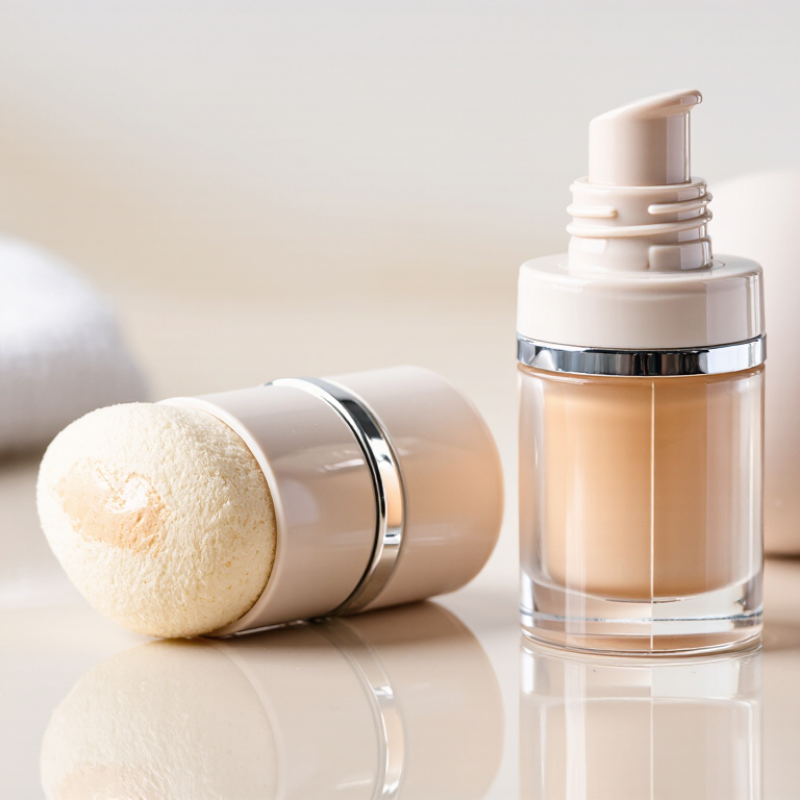
What Is a Refillable Foundation Applicator?
Main Components of a Refillable Foundation Applicator
A refillable foundation applicator has a reusable outer shell and a replaceable or refillable product container. The container holds liquid foundation, often in a small cartridge or reservoir. Its shape matters: a snug fit helps prevent movement when the applicator is carried in a bag. A pump or twist mechanism moves product toward the outlet. Some designs use a valve to limit leaks and reduce air exposure. The mechanism should dispense a controlled amount, not a sudden blob. That detail matters.
The applicator head is the part that touches the skin. It may be a sponge, cushion, or compact brush, depending on the design. A soft sponge can spread foundation across the nose and cheeks, while a brush may offer more precise coverage. The head connects to the housing through a neck or dispensing plate, where product emerges. A cap protects this surface from dust and contact with other items. Seals and threaded joints matter too; loose connections can cause messes, even when the container looks secure. Small parts matter. Check whether the cartridge, head, and housing are designed to work together before replacing anything. Cleaning instructions vary, and forcing water into a pump can affect how it dispenses. Not every design is easy to take apart. That is worth considering.
A refillable foundation applicator is a makeup applicator designed so its foundation cartridge or reservoir can be replaced while the applicator housing is reused.
This schematic shows a typical top-to-base arrangement. Designs vary, and the chart is not to scale.
A refillable foundation applicator combines a small product reservoir with a dispensing tip, such as a sponge, brush, or cushion. The foundation sits inside a removable cartridge or chamber rather than in a disposable package. Depending on the design, pressing a button or turning a base moves product through a narrow channel to the applicator surface. The exact mechanism varies, so not every model dispenses in the same way.
The controlled flow can make touch-ups easier. A small press may release enough foundation to cover a cheek, while repeated presses add more. Small amounts matter. This can help limit spills, though a blocked channel or overly firm press may cause uneven dispensing. Watch the tip as you apply, and spread the product in thin layers. That gives you a chance to see how much coverage you actually need.
Tips: Check the refill instructions before opening the chamber. Wipe the applicator tip after use, and let it dry if its material allows. Keep the reservoir closed when you are not using it. If the foundation begins to smell unusual, changes texture, or stops flowing smoothly, pause and inspect the applicator; cleaning may help, but it will not fix every problem. Refill systems can reduce packaging waste, yet the refill and applicator still need regular care.
Refillable foundation applicators use replaceable cartridges or reservoirs inside a durable outer case. Airless pumps suit many runny liquid foundations: a sealed pouch or piston pushes product upward with less air exposure. Twist-up reservoirs can handle thicker liquids, but narrow openings may clog. Cushion-style cases pair a refill pan with a sponge, giving quick, light coverage. Loose powders usually need a different dispenser, while very thick balms may not flow through a pump. Not every formula fits.
Packaging choices deserve scrutiny. The Ellen MacArthur Foundation’s 2016 New Plastics Economy report estimated that only 14% of plastic packaging was collected for recycling globally, and just 2% was recycled into packaging of similar quality. That figure does not measure foundation applicators specifically, but it shows why refill systems attract interest. A refillable shell is not automatically lower-impact; cleaning, replacement parts, and mixed materials matter too. I would check whether the refill is easy to find and whether the formula dispenses evenly before choosing a design.
Tips: Match the opening to the formula’s thickness. Test a small amount first. Clean reusable sponges regularly, and let parts dry fully before refilling to limit residue and uneven application.
A refillable foundation applicator holds or dispenses foundation and is designed to be replenished or reused. Compatibility depends on the applicator’s dispensing mechanism, the formula’s viscosity, and the manufacturer’s refill instructions.
| Common design | How it works | Usually compatible with | Less suitable for | Refill and care notes |
|---|---|---|---|---|
| Cushion compact | A porous sponge or mesh holds liquid foundation; a puff picks up product when pressed against the surface. | Fluid and lightweight liquid foundations formulated to flow through or sit evenly in a cushion. | Loose or pressed powders, very thick creams, and formulas with particles that may clog the cushion. | Use a refill designed for the compact when available. Keep the puff clean and close the compact securely to reduce drying and contamination. |
| Airless pump container | A pump advances a platform or draws product through a valve, dispensing measured portions with limited air exposure. | Liquid foundations with a viscosity and texture suited to the pump’s opening and mechanism. | Powder products, formulas containing large particles, or unusually thick products that the pump cannot dispense reliably. | Refill only if the container is designed to be opened and refilled. Avoid forcing product into a sealed or non-refillable pump. |
| Twist-up reservoir with brush | A twist mechanism pushes product from an internal reservoir toward an attached brush head. | Thin, smooth liquid or serum-like foundation that can travel through the outlet and spread through the bristles. | Thick cream formulas, powders, or products that dry quickly and may block the outlet or stiffen the brush. | Follow the device’s refill directions and clean the brush regularly. Product left in the brush can dry and affect dispensing. |
| Sponge-tip applicator pen | A twist or push mechanism feeds product to a porous sponge tip for targeted application. | Runny or lightweight liquid foundation, especially for touch-ups or small areas, if the applicator is made for that formula. | Powders, gritty formulas, and heavy products that can clog the feed channel or saturate the tip unevenly. | Many sponge-tip pens are not designed for refilling. Check that the reservoir can be safely opened and that the tip can be cleaned or replaced. |
| Refillable compact with solid foundation pan | A removable pan holds cream or pressed foundation, which is applied with a sponge or brush rather than dispensed through a pump. | Pressed powder foundation or solid cream foundation, depending on the pan and applicator design. | Free-flowing liquids, which may leak or fail to stay in a pan not designed to contain them. | Use a pan that fits the compact securely. Keep the applicator clean and let damp tools dry before storing them with the product. |
Compatibility tip: Check the applicator’s refill instructions and the foundation’s texture before use. A formula that is too thick may not dispense, while a very fluid formula may leak from a container not designed for liquids.
A refillable foundation applicator holds product in a reusable case or handle, often with a sponge or cushion tip. The reusable parts need regular care, especially when foundation collects around seams. Wipe the outside with a clean, dry cloth. If the applicator head is made to be washable, follow its care instructions and let it dry completely before reassembly. Never soak a mechanism unless its instructions allow it.
Keep it simple. Wash your hands before changing a refill, and use a clean surface. Remove the old cartridge without touching the new product’s opening. Check that the replacement fits the applicator; a loose seal can cause leaks or let product dry out. Don’t pour fresh foundation into an old cartridge. Residue can mix with the new formula, and cleaning narrow spaces well is difficult. That’s an easy step to overlook.
A damp sponge can feel clean while still holding residue, so inspect it in good light. Replace disposable or worn heads as directed, and stop using the applicator if it develops an unusual smell or visible buildup. Avoid sharing it, particularly around irritated skin. I’ve found that “clean enough” is a fuzzy judgment; if a part cannot be cleaned as instructed, replacing that part is the safer choice. Dry components fully before storing the applicator with its cap on.
A refillable foundation applicator stores makeup in a reusable case and dispenses it through a sponge, brush, or cushion. Depending on its design, you refill a chamber or replace an insert. Using the same case repeatedly may reduce packaging waste, particularly if refills are easy to find and the case lasts. A button or twist mechanism can also dispense small amounts, helping prevent excess product on your fingers or countertop. Some designs fit neatly into a handbag for touch-ups. Convenient, but not effortless. The actual benefit depends on how often you use it and what the refills contain.
Cleaning and compatibility need attention. Foundation can collect around a nozzle or inside a cushion, while an applicator left damp may become unpleasant to use. Follow the maker’s care instructions, and don’t assume every refill fits every case. The fit matters. Shade or formula choices may also be narrower than those for standard packaging. Sponges can absorb some product, and a brush may leave streaks if you rush over dry patches. Pumps sometimes struggle to dispense the final amount. These are small frustrations, but they can make a refillable design less practical for a particular routine.
It combines a product reservoir with a sponge, brush, or cushion tip. The reservoir sits inside a reusable case or handle.
Pressing a button or turning the base can move foundation through a narrow channel. Designs vary. Not every model works the same way.
Start with one small press and check the tip. Add more only where needed, such as across a cheek. Thin layers are easier to assess.
A blocked channel or a firm press may affect the flow. Wipe the tip and check the instructions. Sometimes, cleaning won’t solve it.
Wipe the outside with a clean, dry cloth. Wash the applicator head only if its instructions allow it, then let it dry fully.
Wash your hands and use a clean surface. Remove the old cartridge without touching the new product’s opening. Check that the replacement fits securely.
It’s better not to. Old residue can mix with the fresh product, and narrow spaces are difficult to clean properly. Easy to miss.
Pause if the foundation smells unusual, changes texture, or stops flowing smoothly. Also stop if you see buildup or cannot clean a part as directed. A clean-looking sponge can still hold residue.
A Refillable Foundation Applicator is a reusable tool designed to hold and dispense foundation while allowing the user to replace or replenish its contents. Its main components typically include a reservoir, an applicator head such as a sponge or brush, and a mechanism that moves foundation toward the surface. Depending on the design, product may be released by pressing a button, turning a base, or gently squeezing the container. Applicators vary in shape and capacity, and compatibility depends on the formula’s texture: some work best with fluid foundation, while others can handle thicker or creamier products.
Regular cleaning helps keep the applicator comfortable to use and reduces leftover product buildup. The head should be cleaned and dried according to its material, and refills should be added without overfilling the reservoir. Reusable designs can offer convenient, controlled application and reduce the need to replace an entire tool. However, they may require more upkeep than disposable options, and not every formula or applicator head will work well together.