- English
- 日本語
- 한국어


The global beauty market is becoming more technical, visual, and demanding. McKinsey & Company’s “The Beauty Market in 2023” forecasts the sector could approach $580 billion by 2027. Meanwhile, Korea’s cosmetics exports reached approximately $10.2 billion in 2024, according to Korea Customs Service data reported by South Korea’s Ministry of Food and Drug Safety. These figures reveal strong international demand. They do not, however, measure the brush category separately.
That gap matters. A reliable K-Beauty Brush OEM ODM Manufacturer must connect Korean design sensibility with repeatable factory control. Buyers should examine bristle softness, cut accuracy, ferrule strength, handle balance, coating durability, and cleaning performance. Packaging matters too. A brush should survive shipping, open neatly, and feel comfortable within seconds. Small details often decide customer reviews.
Charlotte Cho, Soko Glam co-founder and a recognized K-beauty authority, has said, “K-beauty is not a trend; it’s a lifestyle.” Her observation helps explain the market’s broader appeal. K-beauty brushes are not merely accessories. They support layered routines, precise application, and a more tactile beauty experience.
Yet supplier claims deserve careful questioning. “Premium” is not a testing standard. Certifications can also vary by factory, product, and market. Buyers should request audit records, material documentation, sample comparisons, and production photographs. Some manufacturers appear impressive online but provide weak after-sales support. That is an uncomfortable reality.
This guide reviews ten leading K-Beauty Brush OEM ODM Manufacturers through product capability, customization, quality systems, minimum order quantities, innovation, and export readiness. The ranking is not absolute. A startup may value flexibility, while a global brand may prioritize capacity and compliance. The best choice depends on evidence, not polished promises.
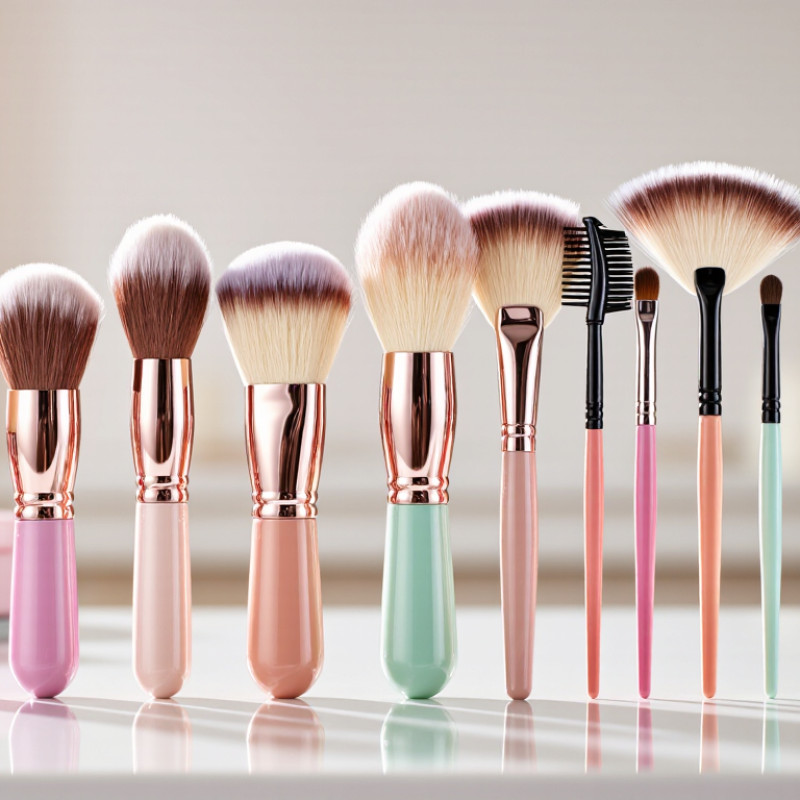
K-beauty brush OEM and ODM manufacturers create tools for cosmetic brands, retailers, and professional makeup users. OEM production follows a client’s specifications, such as brush shape, fiber type, handle material, color, and packaging. ODM services go further. They can support product design, sample development, engineering, and production under the buyer’s label.
This distinction matters when comparing the 10 best K-beauty brush manufacturers. A capable supplier should show stable sampling, documented quality controls, and clear production capacity. Grand View Research estimates that the global makeup brush market will grow steadily through 2030, supported by rising beauty-product use and online retail. McKinsey also projected the wider global beauty market could approach 580 billion dollars by 2027. These figures suggest stronger demand, but they do not prove every supplier is reliable.
Look closely at the details. Ask for fiber shedding tests, ferrule adhesion checks, cleaning instructions, and batch inspection records. Confirm whether the factory controls molding, assembly, printing, and packing internally. ISO-based quality systems can improve traceability, although certification alone is not enough. I have seen attractive samples hide uneven trimming or loose handles. That weakness is easy to miss. Buyers should compare several production batches, not one perfect sample, and review communication speed, minimum order quantities, lead times, and corrective-action procedures before choosing an OEM or ODM partner.
A practical comparison framework for evaluating K-beauty brush OEM and ODM manufacturing partners
| No. | Evaluation Dimension | OEM Manufacturing Information | ODM Manufacturing Information | What Buyers Should Verify |
|---|---|---|---|---|
| 1 | Business Model | Produces brushes according to the buyer’s specifications, drawings, materials, dimensions, and packaging requirements. | Provides existing brush designs or a developed product platform that can be adapted to the buyer’s target market. | Confirm whether the supplier offers pure OEM, private-label ODM, or both services. |
| 2 | Brush Categories | Can manufacture complexion, eye, lip, contour, highlighting, cleansing, and multi-purpose cosmetic brushes when the required tooling and processes are available. | Usually offers a catalog of ready-to-customize shapes, handle styles, ferrules, brush fibers, and coordinated sets. | Request a current catalog and samples representing the exact product category needed. |
| 3 | Brush Fiber Options | May use synthetic fibers, natural hair, or blended constructions according to performance, cost, animal-material, and market requirements. | Commonly provides pre-selected fiber options designed for softness, pickup, blending, precision, or liquid and cream formula application. | Check fiber composition, shedding resistance, odor, softness, cruelty-free requirements, and compatibility with the intended formula. |
| 4 | Handle and Ferrule Customization | Supports custom handle geometry, surface finishes, colors, ferrule materials, bonding methods, and decoration when tooling is feasible. | Typically allows customization of existing handle and ferrule structures with color, logo, coating, and packaging changes. | Review durability, coating adhesion, logo accuracy, corrosion resistance, and compatibility with the target price point. |
| 5 | Product Development | Requires technical drawings, product specifications, prototypes, sample approval, and documented revisions before mass production. | Can shorten development by adapting an existing design, although adjustments may still be needed for dimensions, ergonomics, and formula application. | Ask about sampling stages, prototype charges, revision limits, and ownership of custom tooling or designs. |
| 6 | Quality Control | Quality controls may cover incoming materials, fiber filling, glue bonding, assembly, appearance, dimensions, logo placement, and final packing. | Often uses established inspection standards for catalog products, but private-label changes require a new approved quality specification. | Request inspection criteria, defect classifications, production records, and pre-shipment inspection procedures. |
| 7 | Safety and Compliance | The buyer and manufacturer should define material restrictions, labeling needs, restricted substances, packaging requirements, and destination-market obligations. | Existing products may have baseline material documentation, but private-label changes can require updated declarations and test reports. | Verify applicable market rules, material safety documents, test reports, and claims such as vegan or cruelty-free before publication. |
| 8 | Minimum Order Quantity | Custom tooling, special fibers, unique packaging, and non-standard materials may increase the minimum order quantity. | Catalog-based products may offer more flexible quantities, but logo printing, custom colors, and packaging can still have separate minimums. | Obtain written minimums by product, color, logo method, packaging type, and production batch. |
| 9 | Packaging and Brand Support | Can develop custom boxes, sleeves, pouches, inserts, brush guards, set packaging, and retail-ready presentations from buyer artwork. | Usually adapts existing packaging structures with private-label artwork, colors, and product information. | Confirm artwork specifications, color-matching process, packaging materials, barcode requirements, and packing configuration. |
| 10 | Lead Time and Communication | Development generally involves quotation, sampling, approval, procurement, production, inspection, and shipment, so timing depends on project complexity. | Existing designs may reduce development work, but customization, packaging, production capacity, and shipping schedules still affect delivery. | Request a milestone schedule, sample timeline, production capacity statement, export documents, and a named project contact. |
They usually provide design, material selection, sampling, packaging, and production. Typical products include foundation, eye, lip, cleansing, and travel brushes. Some suppliers also develop handles, ferrules, colors, and custom packaging.
Start with physical samples, not promises. Wash each brush repeatedly and check shape retention. Inspect glue lines, trimmed edges, weight balance, odor, and loose parts. Online photos can be misleading.
Ask about synthetic fibers, softness grades, density, and shedding controls. Test the brush on skin. A dense brush may feel luxurious but spread too much product. Softness alone proves very little.
Request records for shedding, odor, color transfer, and repeated washing. Ask for batch records and inspection reports. Confirm ferrule strength and bonding quality. Certification claims still need verification.
Request three sample rounds when possible. Each round can reveal balance, handle comfort, and packaging problems. A prototype may look excellent yet fail during transport. Small defects become expensive later.
Poorly fitted sleeves can let brushes move inside cartons. Movement may bend fibers or loosen ferrules. Check inner protection, carton spacing, and transport testing. Packaging is not decoration only.
Confirm minimum order quantities, lead times, revision policies, and replacement terms. Ask how quickly the team answers production questions. Keep written specifications with approved samples. Verbal agreements are easy to misunderstand.
Sustainable fibers and recycled packaging may be available. Their performance, appearance, and price can vary. Compare them against washing, shedding, and skin-contact requirements. The greener option is not automatically stronger.
They may choose one attractive sample and ignore the wider sample kit. That is risky. Inspect several brush types under the same standards. A third-party inspection may cost extra, but it can prevent larger losses.
K-Beauty brush OEM and ODM manufacturers help beauty companies develop and produce customized makeup and skincare brushes. An OEM partner typically manufactures products according to a client’s specifications, while an ODM partner may provide product concepts, design support, material selection, prototyping, and complete manufacturing solutions. When evaluating a K-Beauty Brush OEM ODM Manufacturer, businesses should consider product quality, material safety, production capacity, customization options, research and development capabilities, quality control systems, communication, minimum order quantities, lead times, and export experience.
The leading manufacturers in this field may offer facial brushes, eye makeup brushes, lip brushes, body brushes, brush sets, packaging, private labeling, and customized shapes or handle designs. Choosing the right partner requires matching its expertise and services with your target market, product positioning, budget, and launch schedule. A reliable manufacturer should provide consistent quality, transparent processes, flexible development support, and dependable delivery, helping brands create attractive, functional, and market-ready K-beauty brush products.