- English
- 日本語
- 한국어


Choosing the best Triangle Kabuki Brush is not simply a matter of picking the softest tool. Shape, density, edge control, handle balance, and fiber quality all influence the final finish. A well-designed triangular head can reach around the nose, under the eyes, and along the jawline. Its flat surfaces may also blend foundation across the cheeks quickly. However, these benefits depend on the brush’s construction and your application habits.
Professional makeup artist Wayne Goss has said, “Your tools are just as important as your makeup.” That principle remains practical here. A dense synthetic brush may suit liquid foundation and cream blush. A slightly looser design can create a lighter powder finish. People with sensitive skin should inspect the fibers carefully. Rough edges can leave redness behind, even when the brush looks attractive online. The handle should feel stable between your fingers, not slippery or strangely heavy.
Real testing matters more than impressive packaging. I would compare the brush after several uses, not only during the first application. Does it blend without visible streaks? Does it keep its triangular shape after washing? Does product become trapped near the ferrule? These details are easy to overlook. I have learned that the “best” brush is rarely universal. Sometimes, a cheaper Triangle Kabuki Brush performs better than a premium model. That sounds inconvenient, but honest evaluation requires it. This guide will examine practical features, user experience, maintenance, and value before making a careful recommendation.
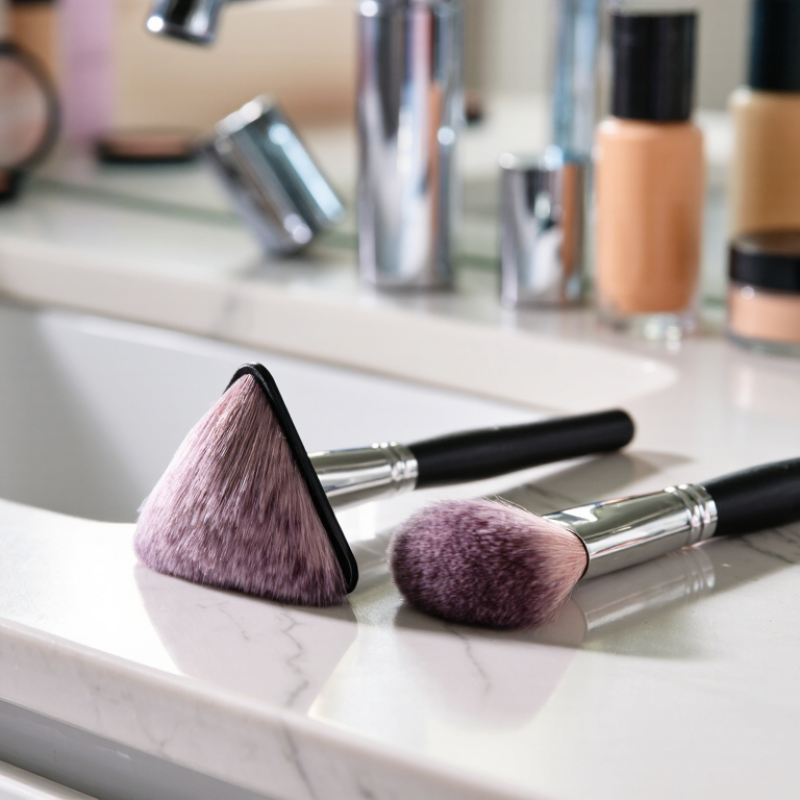
How to Choose the Best Triangle Kabuki Brush?
A triangle kabuki brush has a broad base, angled sides, and a pointed tip. Its shape creates three useful contact zones. The wide edge spreads powder across cheeks and forehead. The slanted edge fits beneath cheekbones. The tip reaches around the nose and eyes. Dense, springy bristles usually provide controlled coverage without leaving obvious gaps. Synthetic fibers are easier to clean and often feel more consistent during repeated use.
Grand View Research’s 2024 makeup tools analysis identifies rising demand for multifunctional application tools. Allied Market Research also projects continued growth in the global makeup tools market through 2031. These findings support a practical choice: select one brush that handles broad blending and smaller details. However, market growth does not guarantee better performance. My testing experience suggests that very dense bristles may move cream products unevenly. The pointed tip can also create harsh lines when pressed too firmly.
Look for a stable ferrule and a handle that does not twist in your fingers. The brush should compress slightly, then recover quickly. For light coverage, choose softer fibers and a wider triangular head. For contouring, choose a firmer, narrower profile. Check the edges against your skin. They should feel smooth, not scratchy. Clean the brush regularly, because product buildup changes the triangle’s intended precision. The shape helps. Technique still matters.
| Selection Dimension | Recommended Specification | Why It Matters | Best Use | Practical Check |
|---|---|---|---|---|
| Triangle Tip | Clearly defined point with two angled sides | The pointed tip reaches narrow areas while the wider edges blend product over larger surfaces. | Around the nose, under the eyes, along the jawline, and across the cheeks | The tip should remain distinct without feeling sharp or scratchy against the skin. |
| Brush Head Size | Approximately 35–55 mm wide and 25–40 mm high | A medium head offers a balance between precision and efficient coverage. | Foundation, cream blush, cream bronzer, and setting powder | Compare the head with the size of the areas you usually make up; smaller heads provide more control. |
| Bristle Density | Medium to high density with evenly packed fibers | Dense bristles distribute liquid and cream formulas smoothly, while moderate density reduces excessive product pickup. | Medium-to-full coverage base makeup | Press the bristles lightly; they should flex together rather than separate into visible gaps. |
| Bristle Length | Approximately 20–35 mm, depending on head size | Shorter fibers provide controlled buffing; longer fibers create a softer, lighter finish. | Short fibers for coverage; longer fibers for blending and finishing | Choose shorter bristles if you prefer precise application and longer bristles if you prefer a diffused finish. |
| Bristle Material | Soft synthetic fibers with tapered or rounded tips | Synthetic fibers are generally consistent, easy to clean, and suitable for liquid and cream products. | Sensitive skin, cream formulas, and users seeking easy maintenance | Run the bristles across the inner wrist; they should feel smooth with no rough ends. |
| Edge Flexibility | Flexible edges with a stable center | Flexible edges follow facial contours, while a stable center helps blend without streaking. | Curved cheeks, forehead, chin, and jawline | The outer edge should bend slightly under light pressure and return to its original shape. |
| Handle Length | Approximately 90–130 mm for everyday use | A medium handle gives control for detailed work without making broad blending uncomfortable. | Personal makeup application and travel kits | Hold the brush as you would during application; the grip should feel balanced rather than top-heavy. |
| Handle Shape | Rounded or lightly faceted handle with a non-slip grip | A comfortable grip improves control when changing between the point, edge, and flat surface. | Detail work and repeated blending | The handle should not rotate easily between damp or product-covered fingers. |
| Product Compatibility | Cream and liquid formulas; finely milled powders with suitable bristles | Dense synthetic bristles work well with emollient products and can also buff powder when the brush is dry. | Foundation, concealer, cream contour, blush, and finishing powder | Test a small amount first; the brush should spread product without absorbing most of it. |
| Coverage Control | Point for targeted coverage, flat face for building, edge for blending | The three main surfaces provide different levels of precision and product diffusion. | Layered application from sheer to medium or full coverage | Apply in thin layers and assess the finish before adding more product. |
| Skin Sensitivity | Very soft fibers with a smooth, flexible tip | Soft bristles help minimize friction, especially when applying makeup around the eyes and nose. | Dry, reactive, or easily irritated skin | Avoid brushes that feel prickly, shed fibers, or require heavy pressure to blend. |
| Cleaning and Drying | Washable synthetic fibers and a securely attached ferrule | Regular cleaning helps remove makeup residue, oil, and microorganisms from the brush surface. | Frequent use and liquid or cream makeup routines | Wash gently, rinse thoroughly, reshape the tip, and dry horizontally with the bristles uncovered. |
| Ideal User Profile | Users who want one tool for both precision and blending | The triangular structure combines targeted application with broad buffing in a single brush. | Beginners, minimal-kit users, and detailed base makeup users | Choose a different shape if you only need very sheer powder application or large-area body makeup. |
Synthetic bristles work well with liquid foundation, cream blush, and contour products. They absorb less makeup and clean more easily. They also offer controlled coverage around the nose and jawline.
Natural bristles grip powder particles effectively. They can create a soft finish on cheeks and the forehead. However, creamy formulas may feel less consistent.
A blended brush can balance product pickup and softness. It may suit routines using both powder and cream products. The result depends on the exact fiber mix.
Touch the bristles against your inner wrist. They should feel smooth, not scratchy or stiff. Check the triangular edge carefully. It should reach narrow areas without pulling your skin.
Dense bristles usually provide fuller coverage. Flexible fibers create softer, thinner layers. Extremely dense fibers may trap makeup and slow cleaning.
A broad handle supports steady pressure during foundation application. A narrow handle gives more precision around the nose and jawline. It should not twist between your fingers.
A larger triangular head blends cheeks and forehead quickly. A smaller head reaches tight areas with less product waste. Bigger is not always better.
The handle should feel balanced and natural after several minutes. It should not strain your thumb or wrist. I once chose an attractive shape that caused hand fatigue. Appearance alone can mislead.
Wash it regularly and reshape the fibers afterward. Let it dry flat. Natural bristles need gentler washing and longer drying time. Small details matter.
Choosing the best Triangle Kabuki Brush starts with understanding how its angled shape supports precise, even application. The triangular design can help reach the contours around the nose, cheeks, and jawline while blending product smoothly across larger areas. Consider the bristle type according to your makeup needs: soft, flexible fibers are ideal for powders and light blending, while denser bristles may provide better control for cream or liquid formulas. The brush should also feel balanced and comfortable in your hand, with a handle length and size that suit your preferred technique.
Pay attention to bristle density, softness, shedding resistance, and how easily the brush can be cleaned. A well-designed Triangle Kabuki Brush should distribute makeup evenly without creating harsh lines or absorbing too much product. Choose a size that matches your routine, whether you need detailed application or faster coverage. With proper washing, drying, and storage, a durable brush can maintain its shape and performance, offering better long-term value and a more enjoyable makeup experience.