Choosing the best Mini Jelly Makeup Puff requires more than admiring its soft, colorful appearance. Its material, shape, density, and cleaning routine affect how evenly makeup reaches the skin. A useful puff should feel flexible, but not collapse between your fingers. It should press foundation into the cheeks without leaving visible edges.
Professional makeup artist Lisa Eldridge often explains that makeup should enhance skin rather than mask it. That principle matters here. A Mini Jelly Makeup Puff should create a thin, breathable layer, especially around the nose, eyes, and mouth. Look for a smooth surface, consistent elasticity, and a pointed tip for narrow areas. A rounded side can blend cream blush across the cheek quickly. Small details matter.
Test it with a pea-sized amount of foundation. Press, do not drag. Watch whether the puff absorbs too much product or leaves small dots. Those clues reveal its real performance. A puff that feels luxurious may still waste makeup. Not every “jelly” texture performs equally.
Hygiene also deserves attention. Choose a design that rinses easily and dries completely. A damp puff left in a closed pouch can develop an unpleasant smell. That is easy to overlook. Replace it when the surface becomes sticky, cracked, or difficult to clean.
This guide will compare texture, control, comfort, durability, and value. It will also question popular claims, because “ultra-soft” does not always mean better. Your skin type, makeup formula, and application habits should decide the final choice.
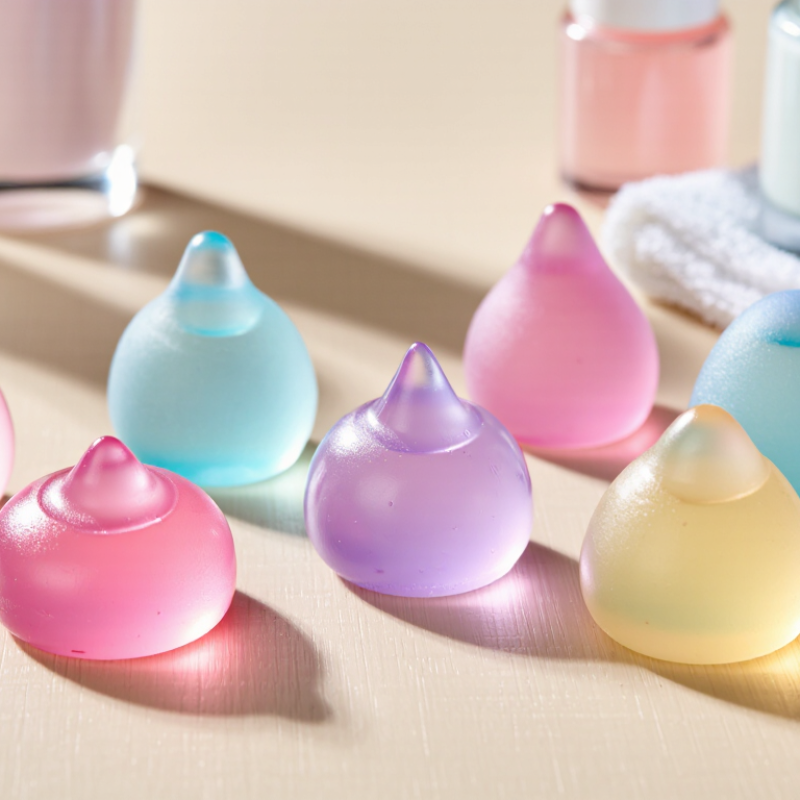
Choosing a mini jelly makeup puff starts with its material, not its color or shape. Most options use silicone, thermoplastic polyurethane (TPU), or soft polyurethane foam. Silicone is non-porous and wipes clean easily. TPU offers a flexible, skin-like bounce with stronger tear resistance. Foam feels lighter, but it can absorb liquid foundation and require deeper cleaning.
McKinsey’s 2023 beauty industry report projects the global beauty market could reach about $580 billion by 2027. That growth increases demand for reusable application tools, yet “reusable” should not mean permanently hygienic. Check the puff after each wash. A sour smell, sticky surface, or small split means replacement is sensible. I once trusted a soft puff too long; its smooth appearance hid product buildup around the edge.
Circana reported that U.S. prestige beauty sales reached $31.7 billion in 2023, showing how strongly consumers continue investing in makeup routines. For daily use, choose a mini puff with a dense, even surface and a controlled rebound. It should compress under light pressure, then recover without warping. Avoid sharp seams. They can drag across the cheek.
Look for clear material information, washable construction, and latex-free claims when needed. A dry puff gives more coverage. A slightly damp one creates a thinner finish. Test both methods on the hand first. Small details matter.
Choosing the right mini jelly makeup puff starts with matching its shape to your routine. A teardrop puff offers precision around the nose, inner eyes, and mouth. Its pointed tip reaches narrow areas without disturbing nearby makeup. A rounded puff works better for cheeks, forehead, and quick blending. For daily touch-ups, a small oval shape can feel more balanced in your hand.
Size matters just as much. A puff around two to three inches wide is portable, but still useful for foundation and cream blush. Smaller puffs provide control, although they may take longer on larger areas. I once chose a very tiny puff for convenience. It looked practical, but blending my jawline became frustrating. That experience taught me to consider speed, not appearance alone. Check the puff’s flexibility, too. A softer surface usually presses makeup gently, while a firmer edge can improve detail work.
Tips: Hold the puff between two fingers and test its reach around your nose. Use the rounded side for pressing product, then the tip for corners. Avoid dragging it across the skin. Clean it after frequent use, and replace it when the texture becomes sticky, cracked, or difficult to wash. A slightly imperfect shape is acceptable if it gives you better control. Your routine matters more than a supposedly universal size.
| Puff Shape | Suggested Size | Best For | Application Areas | Coverage & Finish | Handling Notes |
|---|---|---|---|---|---|
| Teardrop | 45–55 mm long | One-puff routines and precise makeup application | Cheeks, forehead, nose sides, and inner eye corners | Buildable coverage; rounded end blends larger areas while the tip reaches narrow spaces | Hold the wider end for pressing foundation and use the tip with light tapping |
| Triangle | 35–50 mm per side | Detail work and targeted concealer placement | Under-eyes, around the nostrils, mouth corners, and blemishes | More controlled, medium-to-full coverage in small sections | Use a flat edge for concealer and a point for small corrections; avoid dragging on delicate skin |
| Diamond | 40–55 mm across | A balance between precision and quick blending | Cheek contours, nose bridge, forehead, and under-eyes | Even, medium coverage with separate edges for broad and narrow areas | Rotate the puff to match the area; use a broad face for foundation and an edge for detail |
| Round | 45–60 mm diameter | Fast application over relatively flat areas | Cheeks, forehead, chin, and jawline | Sheer-to-medium coverage with a smooth, uniform finish | Best for pressing and patting; less precise around the nose and inner eye area |
| Oval | 45–65 mm long | Quick base makeup with a comfortable grip | Cheeks, forehead, chin, and neck edges | Light-to-medium coverage across larger sections | Choose a narrower oval if you frequently work around the nose or have a smaller face |
| Half-Moon | 40–55 mm wide | Under-eye setting and curved facial areas | Lower eyes, cheek contours, and sides of the nose | Thin, controlled powder application with less product movement | Use the curved edge beneath the eye and the straight edge for sharper placement |
A good mini jelly makeup puff should feel smooth, flexible, and slightly springy. Its texture affects how evenly it spreads foundation, concealer, or cream blush. Run your fingers across the surface before buying. A sticky finish may grip product well, but it can also create patchy coverage. A slippery surface may waste makeup during blending.
Firmness matters too. Press the puff against your palm and watch how quickly it returns to shape. A very soft puff feels comfortable around the eyes, yet it may absorb too much liquid product. A firmer puff offers better control near the nose and jawline. From my own testing, medium firmness is usually the most practical choice. Still, this is not universal. People with different techniques may prefer another balance.
Tips: Match the puff with your product’s texture. Use a softer puff for thin, hydrating formulas and a firmer one for thicker cream makeup. Test a small amount first. If the puff leaves streaks, feels unusually tacky, or changes shape after washing, reconsider it. Clean it gently with mild soap, rinse thoroughly, and let it dry completely. I once stored a damp puff in a closed cosmetic bag, and its texture changed within days. Small details matter.
Choosing the best mini jelly makeup puff means examining hygiene, durability, and cleaning effort together. A smooth, non-porous surface usually traps less product than fabric. It also allows quick visual checks for foundation, oil, or powder residue. In my own testing, clear jelly puffs made hidden buildup easier to notice. That was useful, but slightly uncomfortable.
Cleaning should be simple enough for daily use. Wash the puff with lukewarm water and a mild, fragrance-free cleanser after several applications. Press it gently between clean fingers, then rinse until the water runs clear. Avoid sharp nails, boiling water, and harsh alcohol-based products. I once stored a damp puff in a closed cosmetic bag. It developed an unpleasant smell. My mistake. Proper airflow matters. Let it dry completely before storage.
Tips: Keep one puff for liquid products and another for powder. This reduces stubborn residue. Check the edges weekly for tears, stickiness, or surface changes. Replace the puff when cleaning no longer removes odor or discoloration. Never share it, even after washing. A durable puff should keep its shape, but flexibility can change with repeated use. I would rather replace a small tool early than risk applying old residue to sensitive skin.
Selecting the best mini jelly makeup puff starts with your routine, not its appearance. A clear, flexible puff may look attractive, but texture matters more. Press it against your cheek. It should bend gently without feeling sticky or excessively slippery. A balanced surface helps spread liquid foundation, cream blush, and concealer in thin layers. Small details matter.
Check the edges and handle area carefully. Rounded edges work well around the nose and inner eye. A slightly pointed tip reaches small areas without dragging delicate skin. Choose a medium-soft body if you prefer controlled tapping. Very soft puffs can move product unevenly. Firm ones may leave visible patches. I learned this during a rushed morning. The firmer puff saved time on my forehead but irritated my dry cheek. Skin condition can change the right choice.
Hygiene is equally important. After each use, wash the puff with mild cleanser and lukewarm water. Press it in a clean towel, then let it dry fully in an open space. Do not store it wet inside a closed case. Inspect it weekly for odor, cracks, cloudiness, or permanent stickiness. Replace it when cleaning no longer restores the surface. I sometimes keep a puff too long, which is not ideal. Before buying, test one small area with your usual product. Observe coverage, comfort, and how much makeup remains on the puff.
Common materials include silicone, TPU, and soft polyurethane foam. Silicone resists absorption and wipes clean easily. Foam feels light but may hold liquid foundation.
It should feel smooth, flexible, and slightly springy. Press it against your palm. A medium rebound often offers useful control, but preferences differ.
A softer puff suits thin, hydrating formulas. A firmer puff works well with thicker cream products. Test a small amount first.
A dry puff usually gives stronger coverage. A slightly damp puff creates a thinner finish. Test both methods on your hand.
Apply a little foundation or cream blush. Watch for streaks, patchy areas, or unusual stickiness. The puff may not suit that formula.
Use lukewarm water and mild, fragrance-free cleanser. Press gently with clean fingers. Rinse until the water runs clear, then air-dry fully.
Avoid sharp nails, boiling water, and harsh alcohol-based cleaners. Do not store a damp puff inside a closed cosmetic bag. Airflow matters.
Replace it when odor, stickiness, discoloration, or small splits remain after cleaning. A smooth surface can still hide buildup. I once trusted appearance too much.
It can, but separate puffs are more practical. Keep one for liquid products and another for powder. This reduces stubborn residue. Sharing is not recommended.
Choosing the best Mini Jelly Makeup Puff starts with understanding its material, texture, and design. A soft, flexible puff can help apply foundation, concealer, and cream products smoothly, while a firmer surface may provide more control for precise areas. Consider the shape and size based on your routine: rounded edges are useful for blending larger areas, while pointed or angled sections can reach the corners of the nose and eyes. The right puff should feel comfortable in your hand and suit your preferred makeup techniques.
It is also important to check product compatibility, as some puffs work better with liquid, cream, or cushion formulas than with powders. Look for a texture that distributes makeup evenly without excessive absorption. Easy cleaning, quick drying, strong construction, and resistance to tearing are valuable features for regular use. By comparing comfort, performance, hygiene, durability, and maintenance, you can select a Mini Jelly Makeup Puff that matches your makeup habits and delivers a smooth, even finish.