
0%

Choosing a Custom Makeup Brush Manufacturer is a practical decision that can shape your product quality, brand image, and customer trust. A beautiful logo cannot rescue shedding bristles, uneven trimming, or a loose ferrule. The brush must perform well in real routines.

Start by examining the manufacturer’s experience with your product category, target market, and preferred materials. Ask for physical samples, not only polished catalog images. Test each brush on the skin. Check softness, density, balance, odor, washing resistance, and handle durability. A reliable supplier should explain bristle options, ferrule construction, coating methods, packaging, and minimum order quantities clearly. Vague answers deserve attention.

Details matter greatly.

Professional manufacturers usually provide consistent quality-control procedures, production photos, material information, and traceable sample approvals. They should also discuss responsible sourcing and applicable product-safety requirements for your sales regions. However, certificates alone do not prove excellent performance. I have seen attractive samples fail after repeated cleaning, so practical testing remains essential. This is where many buyers underestimate risk.

Consider communication as part of quality. Can the team understand a small design adjustment, such as a shorter handle or softer eye brush? Can they report delays honestly? A dependable Custom Makeup Brush Manufacturer will welcome reasonable questions and document agreed specifications. Yet no supplier is perfect. You may still encounter color variation, packaging errors, or changing lead times. Build inspection checkpoints into the process, and leave room for thoughtful revision. The right partnership is not simply the cheapest quotation; it is a transparent process that protects performance, consistency, and long-term customer confidence.
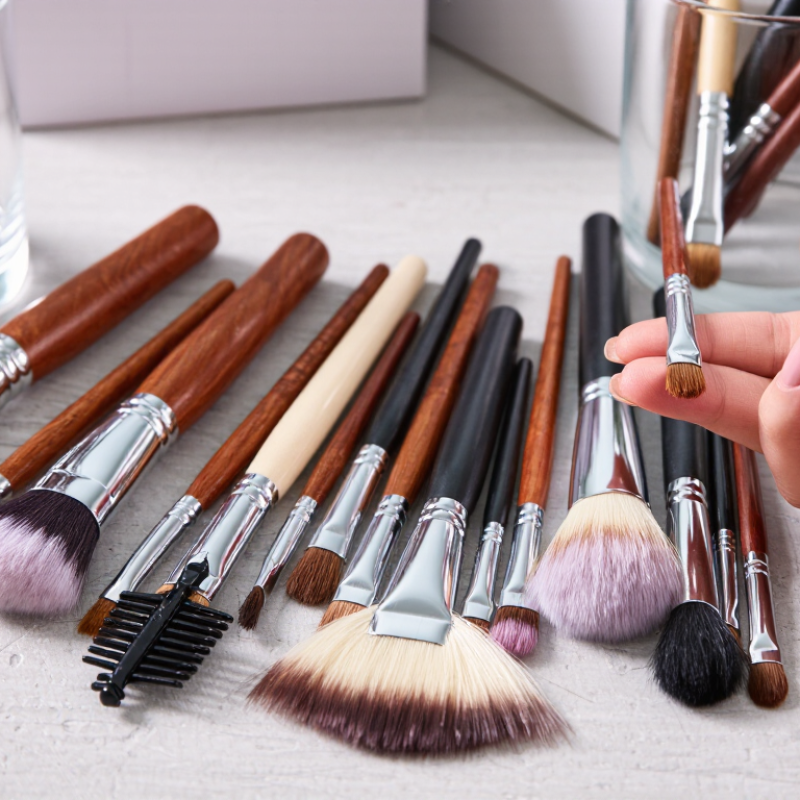
How to Choose a Custom Makeup Brush Manufacturer?

Define Your Custom Makeup Brush Requirements

Before contacting a custom makeup brush manufacturer, define how each brush must perform. Start with the application, not the appearance. A powder brush needs soft, flexible fibers and enough surface area for even blending. An eyeliner brush needs a precise tip that keeps its shape under repeated use. Record the target user, product texture, application method, and expected daily workload.

Small details matter. Will the brush be used with loose powder, cream, or liquid formulas? This choice affects fiber shape, density, and cleaning requirements.

Create a simple specification sheet. Include total length, head diameter, fiber length, handle material, ferrule finish, and logo position. State acceptable measurement tolerances, because handmade assembly can vary slightly. Decide whether synthetic or natural fibers suit your performance and sourcing standards.

Ask for samples with different densities, not only one attractive prototype. Test shedding, odor, softness, pressure recovery, and washing resistance.

I once preferred a very soft sample, but it lacked control around the nose. Softness alone was not enough. That mistake belongs in the testing criteria.

Define order quantity, target cost, packaging needs, and delivery schedule before requesting quotations. Leave room for sample revisions and quality inspections. Ask how the manufacturer checks fiber alignment, ferrule bonding, handle strength, and cleanliness.

Request written records for material specifications and batch consistency. If the brush touches sensitive skin, require suitable safety documentation and clear cleaning guidance.

Avoid vague phrases such as “premium feel.” Describe the exact result: no sharp edges, balanced weight, controlled pickup, and even release. Your requirements should be measurable, testable, and realistic.

Assess Manufacturer Expertise and Production Capabilities

Assessing a custom makeup brush manufacturer starts with evidence, not polished photographs. Ask how long the team has produced brushes and which product types they handle regularly. A manufacturer experienced with tapered, angled, and densely packed brushes should explain how each shape affects application. Request development records, sample revisions, and photographs of production details. Real experience appears in practical answers.

Examine production capabilities in person or through a documented factory audit. Check whether the facility controls material selection, handle molding, ferrule assembly, fiber insertion, trimming, and final inspection. Ask about fiber consistency, shedding tests, adhesive curing, and printing durability. A capable team should provide measurable standards, such as acceptable shedding limits and inspection rates. Review equipment maintenance records and staff training, too. These details reveal more than a large monthly capacity figure.

Request samples made from your drawings, then test them after repeated washing and daily use. Compare softness, shape retention, balance, and handle grip. Ask how defects are recorded and corrected. A reliable manufacturer communicates delays early and explains their cause. No factory is perfect. If every answer sounds perfect, look closer. I would also test a second sample batch, because one successful prototype may hide inconsistent production. Confirm minimum order quantities, lead times, packaging controls, and material traceability before approving the supplier.

Compare Materials, Design Options, and Customization Services

Choosing a custom makeup brush manufacturer starts with material evaluation, not attractive packaging. In production audits, I compare synthetic and natural fibers by softness, resilience, shedding, and cleaning performance. Synthetic fibers offer consistent shapes and easier maintenance. Natural fibers can create a distinctive feel, but quality may vary between batches. Ferrules also matter. Aluminum is lightweight, while brass feels heavier and may improve perceived durability. Check adhesive coverage, handle balance, and odor after assembly. Small defects become obvious during daily use.

Design options should match the application, not only current trends. A tapered face brush needs controlled density for blending. A short, firm eye brush supports precise placement. Ask for samples in several lengths and densities. Test them with liquid, cream, and powder formulas. I once preferred a very soft prototype, then found it absorbed too much product. That mistake changed my testing criteria. Comfort is important, but performance must be measured.

Tips: Request written fiber specifications, sample approval records, and wash-test results. Confirm whether the manufacturer can adjust shape, color, logo placement, packaging, and minimum order quantities. Reliable suppliers explain limitations clearly. Be cautious when every request receives an immediate “yes.” It may sound helpful, but it can hide weak production controls. A detailed timeline, inspection process, and replacement policy provide stronger evidence than polished promises.

Verify Quality Standards, Samples, and Production Consistency

How to Choose a Custom Makeup Brush Manufacturer?

Quality claims should be verified, not simply accepted. Ask for current certificates, audit records, and documented inspection procedures. Confirm each certificate covers the actual factory and production site. A capable manufacturer should explain material controls, worker training, and traceability clearly. Look for testing on bristle shedding, ferrule strength, handle coating, odor, and repeated washing. Vague answers are warning signs.

Samples reveal details that brochures cannot. Request several pieces from the same production batch, not one carefully selected brush. Check the handle finish under bright light. Run your fingers across the ferrule edge. Wash the brush repeatedly and record shedding, drying time, shape recovery, and color changes. It should feel balanced in the hand. However, a perfect sample can still mislead. I have seen attractive samples hide weak batch control.

Production consistency needs measurable controls. Approve a signed reference sample, then define tolerances for length, weight, density, color, and logo placement. Ask about incoming material checks, in-line inspections, and final sampling methods. A pilot run is useful before placing a large order. Compare brushes from the beginning, middle, and end of production. Keep photographs and test notes. Small differences may become obvious later. An honest supplier will discuss defects, corrective actions, and realistic capacity instead of promising flawless output.

Review Pricing, Minimum Orders, Lead Times, and Support

How to Choose a Custom Makeup Brush Manufacturer?

Pricing should be judged beyond the unit quote. Ask for separate costs for mold development, sampling, packaging, printing, and freight. A low price may hide expensive revisions. Grand View Research valued the global makeup brush market at over USD 1 billion in 2023, showing strong demand but intense supplier competition. Request a detailed quotation with currency, payment terms, sample fees, and material specifications. Compare three suppliers using the same brush count and fiber type.

Minimum orders deserve equal attention. A 10,000-piece MOQ may reduce pricing, but it can trap cash in slow-moving inventory. Ask whether mixed colors, shapes, or packaging can share one order. Lead times should include sampling, approval, production, inspection, and shipping. In practice, 30 to 60 production days is common for customized tools, but new molds may extend the schedule. Get each milestone in writing. Delays happen.

Support often separates a reliable factory from a cheap one. Request test reports for fiber shedding, ferrule attachment, odor, and handle durability. ISO 9001 quality principles can indicate structured processes, though certification alone proves little. McKinsey’s 2024 supply-chain research emphasizes resilience and supplier visibility, making communication frequency worth measuring. Ask who handles defects, replacement quantities, artwork changes, and urgent reorders. I would also test a small pilot batch before scaling. It costs more initially, yet one unnoticed shedding problem can damage customer trust.

How to Choose a Custom Makeup Brush Manufacturer?

Review pricing, minimum orders, lead times, and supplier support before requesting a production quote.

The benchmark score uses a 1–5 screening scale: pricing reflects cost competitiveness, MOQ reflects ordering flexibility, lead time reflects production predictability, and support reflects communication speed and after-sales service. Use these targets for early supplier comparison, then confirm the final terms in a written quotation and sample approval.

FAQS

What should I define before contacting a custom makeup brush manufacturer?

Start with the brush’s job, not its appearance. Specify the formula, user, application method, and daily workload. A powder brush needs flexible fibers and broad coverage. An eyeliner brush needs a stable, precise tip. Small details matter.

What information belongs on a brush specification sheet?

Include total length, head diameter, fiber length, handle material, ferrule finish, and logo position. Add acceptable measurement tolerances. Handmade assembly can vary slightly. Describe measurable results, such as balanced weight and even product release.

Should I choose synthetic or natural fibers?

Compare softness, resilience, shedding, odor, and cleaning performance. Synthetic fibers usually offer consistent shapes and easier maintenance. Natural fibers may provide a distinctive feel, but batch quality can vary. The cheaper option may not perform better.

How should I test brush samples?

Request several samples with different densities and lengths. Test them with powder, cream, and liquid formulas. Check shedding, odor, softness, pressure recovery, and washing resistance. Samples can mislead.

What mistake can happen during sample evaluation?

A very soft brush may feel pleasant but offer poor control around the nose. It may also absorb too much product. I once preferred softness and overlooked precision. That mistake changed my testing criteria.

How can I verify production quality?

Ask for inspection procedures, material records, audit documents, and current certificates. Confirm that documents cover the actual production site. Review tests for shedding, ferrule strength, handle coating, odor, and repeated washing.

Why are multiple production samples important?

Ask for brushes from the beginning, middle, and end of a production run. Compare length, weight, density, color, and logo placement. A polished sample may hide weak batch control. Small defects matter.

What should I confirm before placing a large order?

Confirm order quantity, target cost, packaging, delivery timing, and revision allowances. Approve a signed reference sample. Define replacement rules and inspection methods. A pilot run can reveal problems earlier. Perfect output is rarely realistic.

Conclusion

Choosing the right Custom Makeup Brush Manufacturer starts with clearly defining your product requirements, including brush types, sizes, shapes, handle styles, intended use, packaging, and target market. A reliable manufacturer should have proven expertise, suitable production equipment, skilled workers, and the capacity to support both initial development and future growth. It is also important to compare available materials, such as synthetic or natural fibers, handle finishes, ferrule options, color choices, logo application, and other customization services.

Before making a decision, request samples to evaluate softness, shape, durability, application performance, and overall workmanship. Ask about quality standards, inspection procedures, and how production consistency is maintained across large orders. Finally, review pricing, minimum order quantities, production lead times, communication, and after-sales support. The best partner is not always the lowest-cost option, but the manufacturer that offers dependable quality, transparent terms, flexible customization, and consistent service from the first sample through final delivery.

Amelia

Amelia

Amelia is a professional marketing specialist dedicated to helping customers better understand innovative products, practical solutions, and the value they can bring to everyday business operations. With a strong understanding of the company’s product portfolio, market trends, and customer needs,......