
0%

Choosing the right tools for resale requires more than comparing product photos. Wholesale buyers need consistent quality, practical pricing, and reliable supplier communication. This guide examines seven of the best Pressed Oblique Brush Set options for professional and retail channels.

Each selection should be judged through real handling, not catalog language alone. A useful set should offer firm, evenly pressed bristles, a clean angled edge, and comfortable control during detailed application. Small differences matter. A sharp oblique shape can improve precision around brows, cheek contours, and narrow facial areas. However, excessive firmness may feel harsh on sensitive skin.

We also consider ferrule strength, handle balance, shedding resistance, packaging protection, minimum order quantities, and sample availability. These details affect customer satisfaction after the first sale. Suppliers that provide material information, production photos, inspection records, and clear lead times deserve closer attention. Experience suggests that attractive packaging cannot repair unstable brush performance.

There is no perfect set for every market. A salon distributor may prioritize durability, while a beauty retailer may need gift-ready presentation and accessible pricing. Testing samples remains essential. Touch the bristles, check the bonding, and repeat cleaning trials. Some sets may look refined but reveal loose fibers later. That possibility should not be ignored.

The following comparison is designed to support careful purchasing decisions. It balances user experience, manufacturing practicality, and dependable wholesale value.
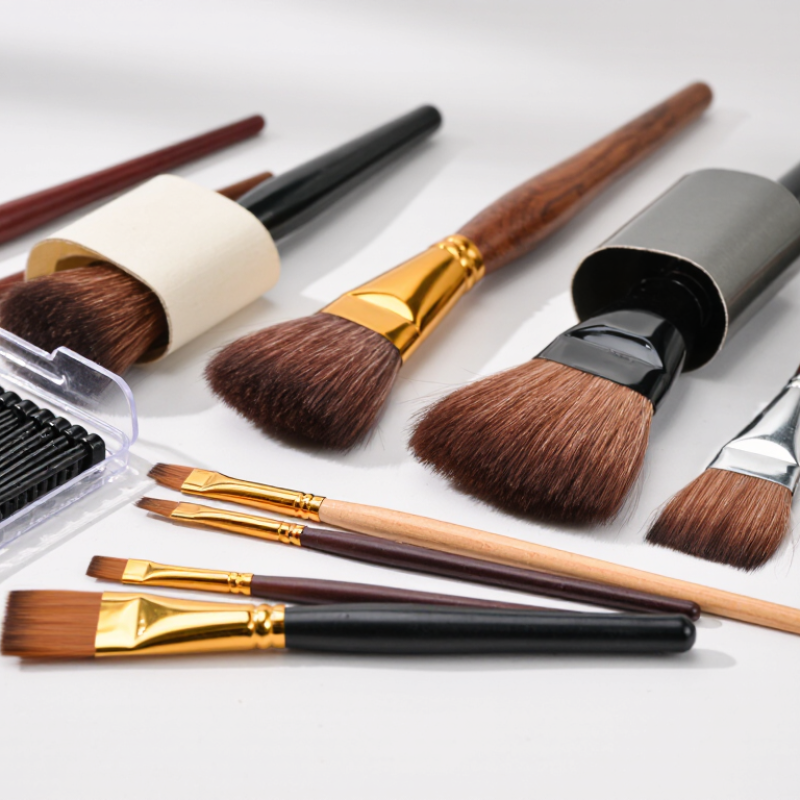
7 Best Pressed Oblique Brush Sets for Wholesale Buyers?

What Pressed Oblique Brush Sets Are and Who Uses Them

Pressed oblique brush sets combine angled brush heads with densely packed fibers shaped under pressure. The slanted edge follows facial contours more naturally than a straight-cut brush. However, “pressed” is not a universal industry standard. Buyers should confirm the fiber density, shaping method, and material specifications before ordering.

These sets are commonly used for contouring, blush, foundation blending, brow definition, and precise concealer work. Makeup artists value the angled profile because it creates controlled strokes around the cheekbones, nose, and jawline. Salon teams often prefer matching sets for consistent service quality. Beauty schools may use them for demonstrations and repeated student practice. Retailers usually target home users who want several tools with one coordinated design.

In wholesale testing, inspect the brush after dry handling and gentle washing. The fibers should recover their shape without obvious gaps or loose strands. Check whether the handle feels balanced during short, repeated movements. Packaging also matters, especially when brushes travel through storage and delivery. I once considered softness the main quality signal, but that was incomplete. A very soft brush can lose control during detailed application. Buyers should compare edge accuracy, cleaning time, labeling, and replacement support before choosing a set.

7 Best Pressed Oblique Brush Set Formats for Wholesale Buyers

Pressed oblique brushes use an angled, compact brush head to improve control and coverage. The chart compares common wholesale set formats by approximate brush-head width, helping buyers match each format with its primary professional use.

Measurements are typical commercial size ranges and may vary by manufacturer. Smaller heads are generally used for detail work, while wider heads support faster face and body application.

Key Features to Compare in Wholesale Brush Sets

When comparing pressed oblique brush sets for wholesale, inspect shape, density, and pressing quality closely. An angled head should create clean cheekbone, brow, or contour lines without losing its edge. Bristles need consistent length and firmness. Too soft, and product placement becomes vague. Too stiff, and the brush may feel uncomfortable on sensitive skin. Check the ferrule for a secure crimp, even finish, and no visible gaps. Handles should feel balanced, especially when buyers use several brushes during one application.

Tips: Request samples from the same production batch. Test ten brushes, not just one. Sweep each brush across textured paper and clean it repeatedly. Watch for shedding, odor, loose ferrules, and shape distortion. Ask for fiber specifications, handle materials, packing details, and quality inspection records. A low unit price can hide higher replacement costs. Small details matter.

In practical purchasing work, I also compare set composition with the target market. A useful set may include angled blush, contour, brow, and liner brushes, rather than many similar shapes. Measure the brush head width and handle length. These details affect shelf presentation and shipping volume. Review the supplier’s production consistency, response speed, and sample revisions. No supplier is perfect. I once underestimated packaging strength, and several handles arrived scratched. That mistake changed how I evaluate cartons and inner protection. Wholesale buyers should record test results, approve a physical sample, and define acceptable shedding and shape tolerances before placing a larger order.

Seven Pressed Oblique Brush Set Options for Bulk Buyers

Seven Pressed Oblique Brush Set Options for Bulk Buyers

Wholesale buyers can choose pressed oblique brush sets according to product use, price target, and retail audience. Option one combines five soft synthetic brushes for blush, contour, highlight, eyeshadow, and blending. Option two adds a dense angled foundation brush for faster base application. Option three uses shorter handles, making it suitable for travel kits and compact packaging. Option four pairs face brushes with two small, precise oblique brushes for brows and concealer. Option five offers larger heads with firm bristles, helping professional users create sharper cheek definition. Option six focuses on sensitive skin, using smooth fibers and rounded edges. Option seven includes varied handle colors and simple recyclable packaging for private-label programs.

From practical sample reviews, bristle recovery matters as much as appearance. After repeated cleaning, the fibers should return to their original angle without shedding. Ferrules need even pressure, with no visible gaps or loose movement. A balanced handle also reduces hand fatigue during long application sessions. However, softer fibers may lose precision on thicker creams. That trade-off should be tested rather than assumed.

Bulk buyers should request samples from each set configuration. Check weight, odor, glue marks, edge trimming, and packaging strength. Test ten to twenty pieces from every sample batch. One sample can look perfect. A larger check reveals variation. I have found that low-cost sets sometimes perform well, but inconsistent density can increase returns. Clear inspection standards, production photos, and replacement terms make purchasing more reliable.

How to Evaluate Quality, Pricing, and Supplier Reliability

For wholesale buyers, a pressed oblique brush set should be judged beyond its attractive product photos. Check whether the bristles keep their angled profile after repeated washing.

A useful sample test includes ten firm strokes across the hand and several applications of powder or cream. The brush should feel balanced, not top-heavy. Inspect the ferrule closely. Loose metal, uneven glue, and sharp edges often signal weak production control. Handle coating matters too, especially when staff use the brushes for long periods.

Pricing needs a practical breakdown. Compare the unit price with bristle density, handle material, set size, packaging, and shipping volume.

A low quotation may exclude custom cartons or inspection fees. Ask for a landed-cost estimate instead. Small details matter. Confirm the minimum order quantity, sample charge, replacement policy, and production lead time in writing.

I once overlooked inner packaging, and several handles arrived scratched. That mistake reduced the real margin.

Supplier reliability is easier to measure through evidence than promises. Request recent batch photos, material specifications, and a simple quality-control report.

Check whether the supplier answers technical questions clearly and keeps the same details across documents. A pre-shipment inspection can verify brush shape, shedding, labeling, and carton counts.

Still, inspections are not perfect. A stable supplier should explain defects honestly and offer a workable remedy, rather than blaming transport immediately. Test communication during sampling, because delayed replies can become expensive during seasonal demand.

Wholesale Ordering, Customization, and Packaging Considerations

Wholesale buyers should evaluate pressed oblique brush sets beyond appearance. Check bristle density, edge shape, handle balance, and ferrule strength. An angled brush should hold its line during repeated application. The cut edge must feel smooth, not scratchy. During sampling, wash several brushes and test them on cream and powder formulas. Shedding after one wash deserves attention. Minor differences can appear between samples and production units. That gap needs discussion.

Ordering details should be confirmed in writing. Specify set quantity, brush dimensions, fiber type, handle material, and acceptable color variation. Ask for a pre-production sample before approving a large order. A simple inspection sheet helps record loose ferrules, uneven tips, stains, and missing pieces. Do not rely only on product photos. They hide useful flaws.

Customization can include handle colors, printed logos, sleeve cards, and insert layouts. Keep artwork in editable files and approve a physical color sample. Packaging should protect angled tips from crushing. Individual sleeves, molded trays, or recycled cartons may suit different shipping routes. Test one packed carton with a drop and vibration check. It is not glamorous, but it reveals weak corners. Packaging can also increase storage costs, so calculate carton size and units per case before ordering. One overlooked detail: inserts may bend inside humid warehouses. A stronger paper stock may be worth the small increase.

FAQS

What pressed oblique brush set options can bulk buyers choose?

Buyers can choose five soft synthetic brushes for blush, contour, highlight, eyeshadow, and blending. Some sets add a dense angled foundation brush. Others use short handles, precise brow brushes, larger firm heads, or sensitive-skin fibers.

Which set works well for travel kits?

Short handles fit smaller bags and compact packaging. They reduce storage space. However, shorter handles may feel less comfortable during long applications.

How can buyers test bristle quality?

Wash the brushes repeatedly and check whether the fibers regain their angled shape. Apply powder and cream products several times. Ten to twenty pieces reveal variation better than one sample.

What should buyers inspect on the ferrule and handle?

Look for even metal pressure, tight movement, and clean edges. Avoid visible gaps, loose parts, sharp edges, or glue marks. A balanced handle can reduce hand fatigue.

Are softer fibers always better?

Not always. Soft fibers feel comfortable on sensitive skin. They may lose precision when applying thick cream products. Test both comfort and control.

How should buyers compare wholesale pricing?

Compare the unit price with bristle density, handle material, set size, packaging, and shipping volume. Ask for the landed cost. A low quote may exclude cartons, inspection fees, or other charges.

What supplier evidence should buyers request?

Request material specifications, recent batch photos, and a basic quality-control report. Confirm order quantity, sample charges, replacement terms, and production timing in writing. Clear answers matter more than confident promises.

What packaging checks can prevent losses?

Test carton strength and inner protection. Inspect handles for scratches after delivery. I once missed inner packaging, and the real margin fell. That mistake still deserves attention.

How can buyers assess supplier reliability before seasonal demand?

Test communication during sampling. Ask technical questions and compare answers across documents. Delayed replies can create expensive problems later. Inspections help, but they are not perfect.

Conclusion

A Pressed Oblique Brush Set is a practical collection of angled, compact brushes designed for controlled application, blending, contouring, detailing, and other precision-focused beauty tasks. This guide explains who typically uses these sets, including professional makeup artists, salons, retailers, training institutions, and private-label businesses. It also highlights the main features wholesale buyers should compare, such as bristle softness, density, shape consistency, handle durability, ferrule construction, set variety, and ease of cleaning.

The article presents seven suitable brush set options for bulk purchasing, ranging from essential everyday assortments to specialized contour, eye, face, and travel-focused combinations. It also outlines how to evaluate quality, compare pricing, verify supplier reliability, and review samples before placing a large order. Additional considerations include minimum order quantities, customization options, logo placement, color selection, protective packaging, labeling, shipping preparation, and consistent quality control. These factors can help buyers select a dependable set that matches their target market, budget, and long-term distribution plans.

Charlotte

Charlotte

Charlotte is a dedicated marketing professional with a strong understanding of the company’s products, customers, and industry landscape. With a thoughtful, research-driven approach, she transforms complex product information into clear, practical, and engaging content that helps readers make......